
Microdosing mushrooms has moved from Silicon Valley biohacking circles into mainstream wellness conversations across Canada. Whether you’ve heard anecdotal accounts of improved mood and focus or you’re curious about the growing body of psychedelic research, you’re likely wondering: how do I actually start?
This guide walks you through every practical step—from choosing your form and measuring doses to building a sustainable daily routine. We’ll cover what the science actually says, how to stay safe, and how to track your experience so you’re not just hoping for results, you’re measuring them.
Quick Answer: How to Microdose Mushrooms Safely
If you want the short version before diving deep, here’s what microdosing psilocybin actually looks like in practice.
Microdosing mushrooms means taking roughly 5–10% of a typical psychedelic dose—usually 50–200 mg (0.05–0.2 g) of dried Psilocybe cubensis. At this sub perceptual dose, you shouldn’t experience any strong visuals, euphoria, or impairment. You should be able to work, socialize, and function completely normally. If you’re “feeling it” in any obvious way, the dose is too high.
For a healthy adult in Canada starting from scratch, a simple approach looks like this:
- Choose a reliable, lab-tested product (Canada Shrooms microdose capsules eliminate the guesswork)
- Start at 50–100 mg every third day, taken in the morning
- Track how you feel in a simple journal for at least 2–3 weeks
- Adjust your dose slowly—up by 25–50 mg if you feel nothing, down if you notice impairment
- Take breaks: follow a protocol, don’t dose daily
The rest of this article walks step-by-step through choosing your form, measuring doses accurately, titrating to find your sweet spot, and designing a practical microdosing protocol. We’ll link to separate deep-dive guides on different forms of microdosing, microdosing protocols and safety considerations along the way.
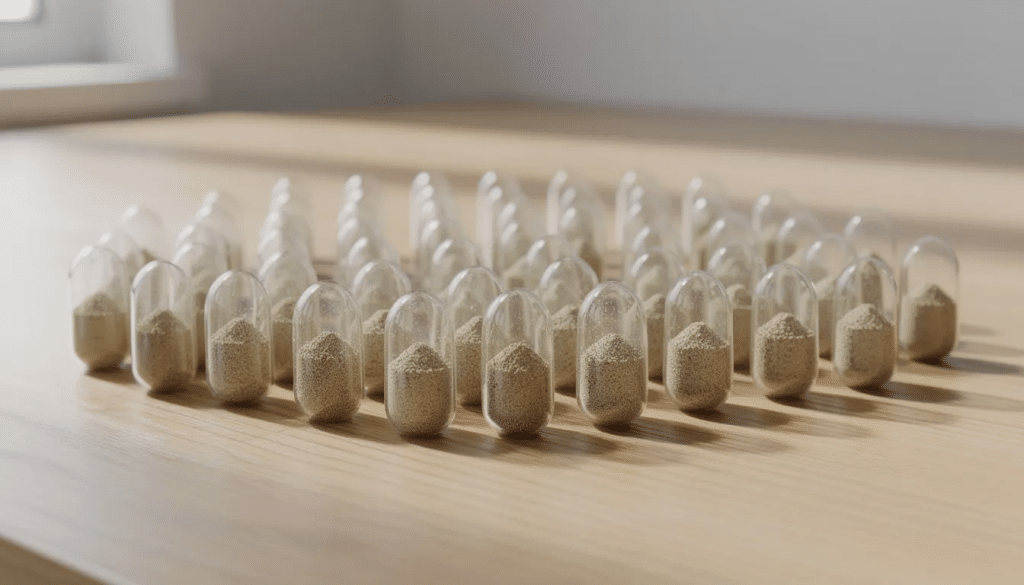
What Microdosing Mushrooms Actually Is (and Isn’t)
Microdosing psychedelics means taking very low, sub-perceptual doses of psychedelic substances—in this case, psilocybin mushrooms—to support mood, focus, and self-reflection without experiencing a “trip.” You’re not seeking altered consciousness or a full psychedelic experience. You’re seeking subtle shifts that integrate into normal life.
Dose Ranges: Microdose vs. Full Trip
To understand what counts as a microdose, you need context:
| Dose | Dried Cubensis | Expected Experience |
|---|---|---|
| Microdose | 0.05–0.3 g (50–300mg) | No perceptual changes, subtle mood/focus shifts |
| Low dose | 0.5–1 g | Mild body sensations, slight visual enhancement |
| Moderate dose | 2–3.5 g | Full psychedelic effects, visuals, emotional intensity |
| Higher doses | 4–5+ g | Profound altered states, ego dissolution |
If you’re seeing strong visuals, feeling euphoric, or struggling to work—it’s not a microdose. The goal is to stay below the threshold where psychedelic effects become noticeable.
Microdosing vs. Full Trips
- Goals: Microdosing aims for subtle, functional enhancement. Full trips aim for immersive, transformative experiences.
- Intensity: Microdoses should be barely perceptible. Full doses produce obvious altered consciousness.
- Setting: Microdosing fits into workdays and normal life. Full trips require dedicated time, safe settings, and often a sitter.
- Integration: Microdosing insights are gentle and ongoing. Trip insights often need deliberate processing afterward.
What Does the Research Actually Show?
The scientific community has produced mixed findings on microdosing psilocybin:
- A 2023 UC Davis placebo controlled study found no significant cognitive function improvements from psilocybin microdosing compared to placebo
- Imperial College researchers noted “patchy evidence” with 2023 data showing neutral brain function impacts
- Previous studies often lacked blinding, making it hard to separate real effects from placebo effect
- A 2019 Harm Reduction Journal survey of 909 microdosers found 78% self-reported mood improvements and 75% creativity boosts—but these are anecdotal reports, not controlled data
Research suggests that psilocybin interacts with serotonin receptors (particularly 5-HT2A), potentially influencing neuroplasticity even at tiny doses. But robust evidence for specific cognitive or emotional benefits remains limited. Many researchers in psychedelic science believe expectancy effects explain much of what users report.
This doesn’t mean microdosing magic mushrooms is useless—it means you should approach it as a personal experiment, not a proven treatment.
Step 1 – Check Your Health, Meds, and Legal Context
Before your first dose of psychedelic mushrooms, you need an honest self-assessment. Microdosing is not risk-free, especially for people with certain medical or psychiatric histories.
Mental Health Screening
Ask yourself whether any of the following apply:
- History of psychosis, schizophrenia, or schizoaffective disorder
- Bipolar disorder (especially Bipolar I with manic episodes)
- Severe dissociation or depersonalization
- Psychiatric hospitalization
- First-degree relatives with schizophrenia or bipolar disorder
If any of these are present, avoid unsupervised psychedelic drugs. Psilocybin can trigger manic or psychotic episodes in predisposed individuals, and a microdose is not “safe” just because it’s small. This is not about stigma—it’s about preventing serious harm.
Cardiovascular and General Health
Psilocybin can transiently raise heart rate and blood pressure (typically 5–10 mmHg). Consider avoiding microdosing if you have:
- Serious heart conditions or arrhythmias
- Uncontrolled high blood pressure
- Recent cardiac events
Medication Interactions
Several medication classes interact with psilocybin in ways that can blunt effects or create unpredictable reactions:
- SSRIs/SNRIs: May significantly reduce psilocybin’s effects through receptor competition
- MAOIs: Can dangerously intensify effects
- Mood stabilizers: May alter response unpredictably
- Antipsychotics: Block the receptors psilocybin acts on
If you’re on any of these, consult a clinician open to psychedelic discussions before experimenting. In Canada, most doctors cannot prescribe psilocybin for general use, but some can advise on risk. Psychedelic-informed therapists and clinics are emerging in major cities.
Legal Status in Canada (2025)
Psilocybin is Schedule III under Canada’s Controlled Drugs and Substances Act. This means:
- Personal possession remains illegal
- Limited medical exemptions exist through Health Canada’s Special Access Program, but these don’t cover casual microdosing
- Drug policy enforcement varies, but you’re responsible for understanding local law
Gray-market dispensaries like Canada Shrooms operate in this space, prioritizing harm reduction, lab testing, and discreet delivery. But the legal risk is yours to accept.
Step 2 – Choose Your Mushroom Form: Capsules, Gummies or Dried Mushrooms
Choosing the right form of psilocybin for microdosing is key to accuracy and convenience. Capsules offer precise, pre-measured doses ideal for beginners, eliminating the need for scales. Gummies provide a more palatable option and can be split for dosage control but may have reduced potency due to processing. Dried mushrooms give experienced users flexibility but require careful weighing and grinding due to potency variations. Tinctures offer liquid dosing for fine control but add complexity.
For a detailed comparison of these forms, see our comprehensive guide: Microdose Capsules vs Gummies vs Dried Mushrooms.
Step 3 – How to Measure a Microdose of Psilocybin
Accurate measurement is the foundation of a sensible microdosing programme. Too high leads to unwanted intoxication and impaired function. Too low may feel like nothing, muddying your self-experiment with noise.
Concrete Dose Ranges
| User Profile | Dose Range | Notes |
|---|---|---|
| Very sensitive or anxious beginners | 50–100 mg (0.05–0.1 g) | Start here and assess |
| Common starter range | 100–200 mg (0.1–0.2 g) | Where most people find their sweet spot |
| Higher tolerance (after titration) | 200–300 mg (0.2–0.3 g) | Only after gradual increase over weeks |
The “10–20% of a recreational dose” rule of thumb is helpful context, but strain differences and individual sensitivity make mg-based guidance plus personal titration more reliable.
How to Weigh Dried Mushrooms
If you’re working with dried psilocybe cubensis mushrooms rather than capsules:
- Use a digital scale with 0.01 g (10 mg) accuracy minimum—0.001 g (1 mg) is better
- Grind your entire batch into uniform powder using a coffee grinder
- Mix thoroughly to even out potency variations between caps and stems
- Weigh individual doses onto parchment paper or directly into capsules
- Pre-measure and store a full cycle’s worth (10–20 microdoses) in labeled containers
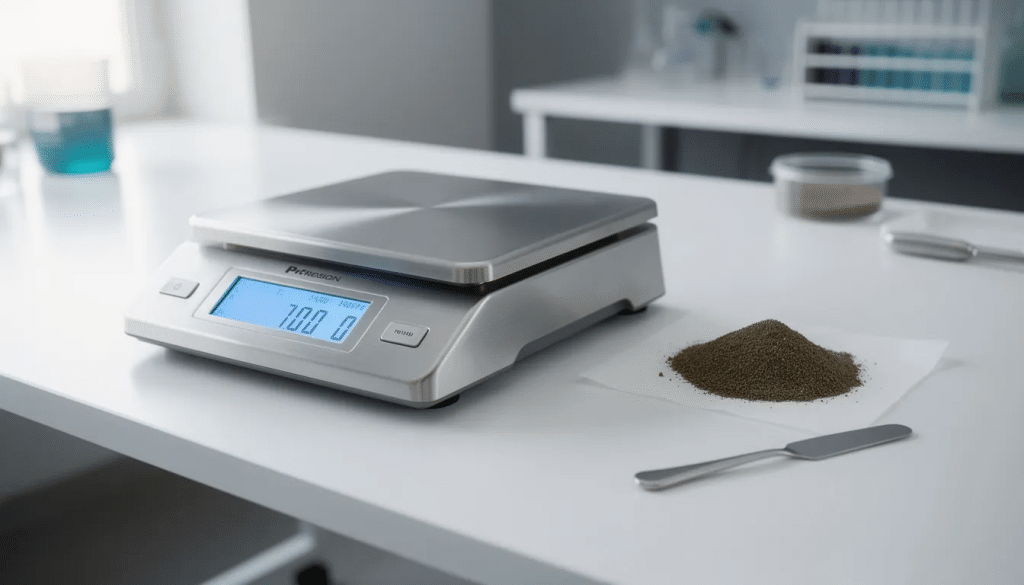
Critical warning: Do not guess by “small pinch” or “tiny piece of a cap.” Visual estimation errors exceed 50% due to irregular shapes and moisture variability. Measurable units only.
Why Capsules Simplify Everything
With Canada Shrooms capsules, each dose is clearly labeled (e.g., 100 mg dried equivalent). You skip the grinding, weighing, and storage complexity entirely. For beginners, this consistency is worth more than the flexibility of raw mushrooms.
Volumetric Dosing (Advanced)
For precise liquid form dosing, dissolve ground mushrooms in distilled water (e.g., 0.2 g in 10 ml yields 0.02 g/ml). Use a syringe to measure exact amounts. This method is useful for very low dose titration but adds complexity most beginners don’t need.
Step 4 – Titration: Finding Your Personal “Just-Noticeable” Dose
Titration means slowly adjusting your dose over several weeks to find the lowest amount that provides gentle benefits without obvious intoxication. Individual variability is substantial—CYP2D6 enzyme polymorphisms mean some people are 2–3x more sensitive than others.
Suggested Titration Roadmap
Week 1: Start at 50–100 mg every third day
- If no effects and no side effects, proceed to Week 2
- If any impairment or discomfort, stay at this level or reduce
Week 2: Increase to 100–150 mg every third day
- Continue tracking mood, focus, and any acute effects
- If still no noticeable shift, consider another increase
Week 3: Try 150–200 mg if needed
- Always step up by only 25–50 mg at a time
- If you detect any obvious psychedelic effects, drop back immediately
Signs Your Dose Is Too High
- Noticeable visual changes (brighter colors, pattern recognition, tracers)
- Euphoria or giddiness
- Impaired focus or difficulty concentrating on work
- Dilated pupils
- Feeling “different” in a way that’s hard to hide
If any of these occur, your psilocybin microdose has crossed into low dose territory. Return to your previous amount.
Signs Your Dose Might Be Right
- Slightly brighter, more stable mood
- Increased curiosity or openness
- Smoother focus, less mental chatter
- More patience with frustrating tasks
- Fully functional—you can work, socialize, and drive normally
Key Principles
- One change at a time: Don’t alter both dose and schedule simultaneously. Adjust dose first, then consider changing your microdosing protocol later if needed.
- Tolerance builds quickly: After 5–7 consecutive days, efficacy drops 40–60%. More is not better. Microdosing aims for stability, not escalation.
- Your first dose is just a starting point: You’re gathering data, not committing to a regimen.
Step 5 – Choosing a Microdosing Protocol
A microdosing protocol balances dosing and rest days to prevent tolerance and optimize benefits. Popular schedules include:
- Fadiman Protocol: Dose one day, then two days off; repeat for 4–8 weeks followed by a break.
- Stamets Protocol: Dose daily for 4 days, then rest 3 days; sometimes combined with supplements like lion’s mane and niacin.
- Work-Friendly Schedules: Options like twice weekly dosing or weekend-only dosing to fit busy lifestyles.
Avoid daily dosing over extended periods due to rapid tolerance and potential health risks. Plan your cycle with clear start and stop dates, typically lasting 4–8 weeks, followed by a review period.
For detailed comparisons and guidance on setting goals and tracking progress, see our full guide: Microdosing Protocols: Schedules, Goals, and Tracking Results.
Safety, Side Effects, and Harm-Reduction Essentials
Psilocybin has low physiological toxicity, with no confirmed overdose deaths from mushrooms alone. Most users experience few or mild side effects at microdose levels, such as transient nausea, mild headache, or slight restlessness. However, psychological risks exist for certain individuals, including triggering manic episodes or psychosis in those predisposed to bipolar disorder or schizophrenia-spectrum conditions.
Quality and testing matter—unregulated products may contain contaminants or vary in potency. Proper storage in airtight, cool, and dark conditions helps maintain potency and safety.
Important cautions include avoiding microdosing during pregnancy, before driving, or when combining with MAOIs. For a comprehensive overview of risks and harm reduction, see our detailed guide: Microdosing Safety and Side Effects.
Sourcing in Canada: Gray-Market Dispensaries and Discreet Delivery
The legal gray area in Canada has given rise to online psilocybin dispensaries serving customers nationwide despite federal prohibition. Understanding this landscape helps you make informed choices.
What Canada Shrooms Offers
Canada Shrooms positions itself as a quality-focused gray-market retailer for Canadian adults:
- Lab-tested psilocybin products (dried mushrooms, microdose capsules, edibles)
- Discreet, smell-proof packaging
- Secure payment methods
- Clear strain information and dosing labels
- Customer support and educational resources
What to Look For in Any Supplier
If you’re evaluating any psilocybin source, check for:
- Published strain information with expected potency ranges
- Clear dosing per capsule or gummy (not vague “serving size” language)
- Third-party lab certificates for potency and contaminants
- Responsive customer support
- Reviews from real Canadian customers, not just testimonials
Home Growing
Cultivating psilocybin mushrooms from spores remains a separate legal and practical topic. While legal to purchase spores in Canada “for microscopy,” growing them is illegal. For beginners focused on microdosing rather than mycology, standardized capsules offer consistency that home cultivation can’t match without significant experience.
Legal Disclaimer
Purchasing and possessing psilocybin remains illegal under Canadian law. You assume all legal risk. Canada Shrooms aims to provide education and harm reduction support, not legal advice. Be informed about drug policy in your province and make choices accordingly.
Integrating Microdosing into Mental Wellness (and When It’s Not Enough)
Microdosing psilocybin is a tool, not a standalone cure for depression, anxiety, PTSD, or burnout. Treating it as a magic solution leads to disappointment. Integrating it into broader mental health strategies leads to better outcomes.
Pair Microdosing with Evidence-Based Supports
The effects of microdosing appear most meaningful when combined with:
- Psychotherapy: CBT, ACT, EMDR, or talk therapy
- Regular exercise: Even 20–30 minutes of walking significantly affects mood
- Sleep hygiene: Consistent sleep schedule, limited screens before bed
- Reduced substance use: Cutting back on alcohol and high-THC cannabis where feasible
- Social connection: Meaningful relationships and community
Common Intentions People Set
Those who report significant improvements often have specific goals:
- Breaking rumination cycles and mental processes that loop unproductively
- Supporting an existing meditation practice with increased present-moment awareness
- Exploring creative blocks in art, writing, or problem-solving
- Easing back into work after burnout or extended leave
- Decreasing anxiety in social or professional situations
When Microdosing Isn’t Enough
If you’re experiencing:
- Suicidal thoughts or self-harm urges
- Inability to function at work or school
- Severe depression lasting weeks
- Panic attacks or debilitating anxiety
Seek professional help immediately. Microdosing is not appropriate as primary treatment for severe mental health issues. It may have potential influence as an adjunct to therapy, but not as a replacement.
Emerging Legal Options
Some Canadian clinics now offer legal psilocybin-assisted therapy under Health Canada exemptions. This model uses higher doses in controlled clinical settings with professional support—fundamentally different from at-home microdosing. If you’re dealing with treatment resistant depression or trauma, these clinical trials and therapy programs may be more appropriate than self-guided microdosing.
Psychedelic studies continue expanding. By tracking your own microdosing protocol alongside working with healthy volunteers in research contexts, the scientific evidence base will grow—informing future drug policy and mental health treatment options.
Final Thoughts and Next Steps
You now have a complete framework for beginning your own microdosing protocol safely and thoughtfully.
The core steps:
- Assess your health and understand the legal reality in Canada
- Choose a reliable form—preferably lab-tested capsules for consistency
- Measure carefully using scales or pre-measured products
- Titrate slowly, starting lower than you think you need
- Follow a protocol with built-in rest days
- Track outcomes honestly in a simple journal
Your first 4–6 week cycle is an experiment, not a commitment. Treat it that way. Gather data. Stay honest about what you’re experiencing versus what you hope to experience. Be willing to adjust—or stop entirely—based on what you learn.
If you’re ready to explore microdosing magic mushrooms, Canada Shrooms offers lab-tested capsules, dried mushrooms, and edibles with discreet Canadian shipping. For deeper dives, explore our guides on:
- Detailed microdosing protocols
- Gummies vs capsules vs dried mushrooms
- Comprehensive safety considerations
- Microdosing Overview
Respect the power of psychoactive substances. Keep communication open with trusted friends or professionals. And remember: strong evidence for microdosing benefits is still developing in the scientific community. You’re an early explorer, contributing to our collective understanding through your careful, documented experience.
Start small. Stay curious. And be willing to stop if microdosing isn’t serving your well being.