
Psilocybin microdosing has become a hot topic for Canadians exploring alternatives for mental health support, focus enhancement, and overall well being. But before you start, you need to understand what the current evidence actually says about safety.
This guide breaks down everything you need to know: the real risks, documented side effects, who should avoid microdosing entirely, and how to approach it more safely if you choose to proceed.
Quick answer: Is psilocybin microdosing safe?
For many healthy adults, microdosing psilocybin appears relatively low-risk when done carefully with accurately dosed, quality-tested products. However, long-term safety data covering 5–10+ years of regular use simply doesn’t exist yet. Most research as of 2026 focuses on short-term observations spanning weeks to a few months—not the kind of timeline that reveals subtle cumulative effects.
The reported side effects are generally mild for most people. Research suggests approximately 20% of microdosers experience issues like reduced focus, heightened anxiety, digestive upset, or headaches. These aren’t typically dangerous, but they’re worth knowing about before you start.
Here’s what you need to understand upfront:
- Mild side effects are common: Anxiety spikes, insomnia, nausea, and mood fluctuations affect a meaningful minority of users
- Serious risks exist for some groups: People with certain mental health conditions (schizophrenia, bipolar disorder, psychotic disorders) or cardiac issues face significantly elevated dangers
- Legal status matters: Psilocybin remains a controlled substance in Canada under the Controlled Drugs and Substances Act, with limited exemptions—possession and use carry real legal risks despite growing decriminalization discussions
- Product quality is critical: Unverified products from unknown sources introduce contamination risks, dosing inconsistencies, and potential misidentification of toxic mushroom species
At Canada Shrooms, we believe that lab testing, accurate dosing, and education are the key pillars of safer microdosing for Canadian adults. This article isn’t medical advice—it’s harm reduction information to help you make informed decisions.

What is psilocybin microdosing, really?
Psilocybin microdosing involves taking very small, sub-perceptual amounts of psilocybin-containing mushrooms—doses low enough to avoid hallucinations or impaired functioning. The goal is to maintain normal daily activities like work and social interactions without noticeable effects.
Typical microdose ranges:
| Dose Type | Dried Mushrooms | Psilocybin Content | Expected Experience |
|---|---|---|---|
| Microdose | 0.05–0.30 g | ~1–5 mg | Subtle mood or focus changes |
| Light dose | 0.5–1.0 g | ~5–10 mg | Mild mood lift, slight visuals |
| Moderate | 2–3 g | ~20–30 mg | Full psychedelic experience |
Common microdosing formats include encapsulated ground mushrooms, standardized capsules, and low-dose edibles. Popular schedules like the Fadiman or Stamets protocols are based on anecdotal use rather than formal medical guidance.
Because mushroom potency varies widely among strains, using lab-tested, standardized products is important for consistent and safer microdosing.
Potential benefits vs. expectations: what current research shows
The psychedelic microdosing benefits that users report are compelling—but it’s crucial to separate anecdotal claims from what controlled studies actually demonstrate.
Self-reported benefits from observational research include:
- Improved mood and reduced depressive symptoms
- Lower perceived stress and anxiety
- Better emotional regulation and flexibility
- Enhanced creativity and problem-solving (claimed, not well-validated)
- Reduced cravings related to substance use disorders
Observational studies have found that psilocybin microdosers report lower depression anxiety scores compared to non microdosing controls. However, these findings come from self-report data, not randomized clinical trials with proper blinding.
What controlled studies show:
When researchers have conducted placebo-controlled experiments, the results are more modest. Up to 2023, randomized studies show mixed or negligible effects for mood and cognition after accounting for expectancy effects. In other words, when people don’t know if they’re getting psilocybin or a placebo, the differences often disappear.
This doesn’t mean the placebo effect makes perceived benefits worthless. If someone feels better, functions better, and experiences mild positive effects—that matters to them personally. But it does suggest caution about making strong health related motivations claims.
The expectancy effect explained:
Believing that microdosing will help you can itself improve mood, motivation, and outlook. The self rated effectiveness that users report may reflect genuine psychological shifts—just not ones caused by psilocybin’s pharmacology. Future research with better blinding and larger samples will clarify this picture.
Critical limitations to understand:
- Microdosing is not a cure-all for mental illness
- It should not replace evidence-based treatment for major depression, bipolar disorder, post traumatic stress disorder, or other psychiatric disorders without medical supervision
- The growing body of anecdotal reports doesn’t substitute for more high quality research
- Currently accepted medical use exists only for controlled clinical trials, not self-managed therapies
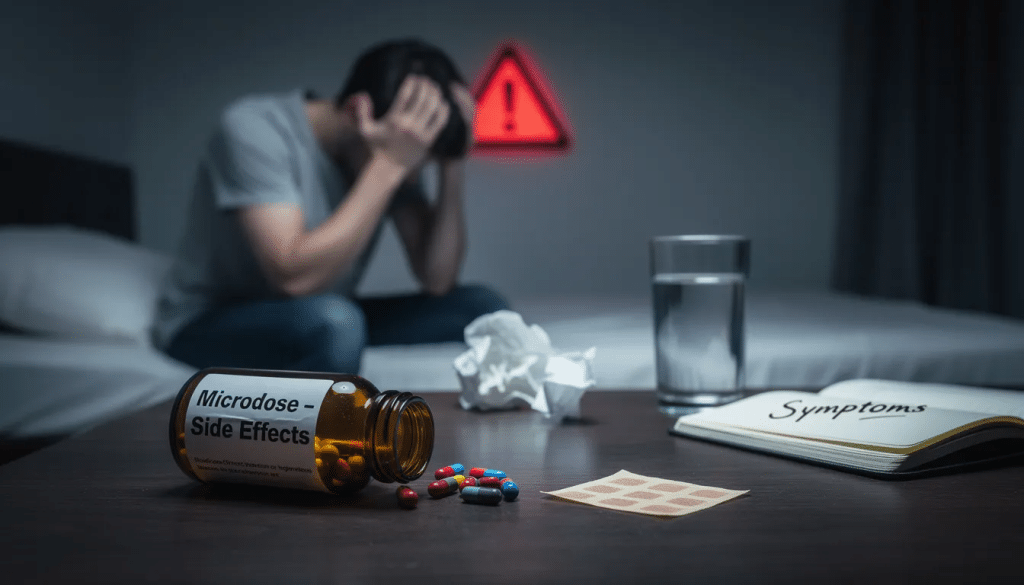
Known side effects of psilocybin microdosing
Even small doses of psychedelic substances can produce adverse effects, especially in sensitive individuals. The fact that you’re not “tripping” doesn’t mean your body and brain aren’t responding to the compound.
Common short-term side effects:
- Mild anxiety or jitteriness, particularly on dosing days
- Slight nausea or digestive upset (more common with whole mushroom consumption vs. extracts)
- Headaches during or after dosing periods
- Subtle visual sensitivity—bright lights may seem more intense
- Changes in appetite (usually decreased)
- Slight body temperature fluctuations
Psychological reactions at microdoses:
- Emotional lability—mood may swing more easily
- Surfacing of suppressed memories or unprocessed emotions
- Increased sensitivity to stress or interpersonal conflict
- Transient paranoia or suspiciousness in anxious individuals
- Feeling “too open” or emotionally vulnerable
Sleep-related issues:
- Insomnia if dosing too late in the day
- More vivid or intense dreams
- Difficulty with sleep quality even when falling asleep normally
- Some users report feeling “wired” on dosing evenings
Tolerance considerations:
Psilocybin tolerance builds rapidly over consecutive days. This means:
- Effects diminish if you dose daily
- Some users are tempted to increase doses to recapture initial effects
- Escalating doses transforms a “microdose” into something closer to a regular dose with more pronounced psychedelic experience potential
Rare but important adverse effects:
- Panic attacks in individuals with anxiety disorders
- Derealization or depersonalization feelings
- Triggering latent psychosis in predisposed individuals
- Worsened mental health symptoms rather than improvement
Potency variability warning:
Side effects can be significantly more pronounced with high-potency strains (Penis Envy variants, Albino varieties) even at low gram weights. A 0.15g dose of a potent strain might deliver what would be a 0.3g+ dose of a milder variety. This underscores why lab-verified potency and precise scales matter for microdosing safe practices.
Who should not microdose psilocybin?
Some groups face significantly elevated risks from psilocybin use—even at microdose levels. If you fall into any of these categories, avoiding psilocybin microdosing altogether is the safest choice unless you’re participating in a legal clinical trial under strict medical professional oversight.
Mental health contraindications:
- Personal or family history of schizophrenia or schizoaffective disorder
- Bipolar I disorder (especially with psychotic features)
- Other psychotic disorders or history of psychotic episodes
- Severe dissociative disorders
- Active suicidal ideation or recent suicide attempts
- Uncontrolled panic disorder or severe anxiety disorders
Psilocybin modulates serotonin receptors and affects default mode network activity in ways that can unmask or exacerbate latent mental health concerns. Even the subtle effects of microdosing can tip a vulnerable person toward crisis.
Physical health problems to consider:
- Serious cardiovascular disease (recent heart attack, unstable angina)
- Uncontrolled hypertension
- History of stroke
- Conditions where acute anxiety or elevated heart rate could be dangerous
Medication interactions:
- MAOIs (risk of hypertensive events and serotonin-related complications)
- Certain antipsychotics
- Lithium (potentially dangerous interactions)
- SSRIs/SNRIs may blunt effects or produce unpredictable responses
Other important exclusions:
- Pregnancy or breastfeeding—no safety data exists, and theoretical risks to fetal/infant development are concerning
- Anyone with a history of substance use disorders should consult a clinician, as microdosing can become another form of compulsive self-medication
- Individuals under 19 should not be using psilocybin products—Canada Shrooms markets strictly to adults in line with harm reduction principles
If you have mental health conditions but are curious about psychedelic assisted therapy, consider exploring legal options like psilocybin assisted psychotherapy through clinical trials or special access programs rather than self-medicating.
Long-term risks and unknowns (2026 perspective)
Modern psilocybin microdosing only became widespread in the 2010s. This means we’re working with limited data on what happens when people microdose several times weekly for years or decades.
Research timeline limitations:
- Most existing studies span weeks to a few months
- No large-scale epidemiological tracking of long-term microdosers exists
- Systematic study of cumulative effects over 5-10+ years hasn’t been conducted
- We’re essentially in an era of observational data and anecdotal reports, not rigorous controlled studies
Potential psychological risks:
- Developing subtle dependence on microdosing as an emotional “crutch”
- Increased avoidance of deeper therapeutic work (“why try therapy when microdosing helps?”)
- Identity changes tied to constant low-level psychedelic use
- Difficulty coping on non-dosing days
- Normalizing regular psychoactive substance use in ways that could extend to other drugs
Theoretical neurological concerns:
No clear human evidence of neurotoxicity exists for psilocybin at typical doses. However, questions remain about:
- Effects of repeated serotonin system modulation over years
- Potential impacts on receptor sensitivity or density with chronic use
- Unknown effects on brain development in young adults
Cardiovascular considerations:
- Psilocybin can cause temporary increases in blood pressure and heart rate
- For younger, healthy adults, this is unlikely to be problematic
- For older adults (50s-60s+) or those with undetected cardiac issues, repeated cardiovascular stress may carry unknown risks
- No long-term cardiovascular safety data exists for chronic microdosing
Tolerance and escalation patterns:
- Tolerance can slowly transform a microdose routine into frequent light psychedelic use
- Some users gradually increase doses to maintain perceived outcomes
- The line between “microdose” and “low dose” can blur over time
Recommended safeguards:
- Take periodic breaks (at least 1–2 weeks off every couple of months)
- Conduct honest self-assessment about dependence and coping
- Avoid indefinite, automatic scheduling without reflection
- Consider whether microdosing is a tool or has become a habit
Legal, product-quality, and poisoning risks in Canada
Psilocybin is classified as a controlled substance under Canada’s Controlled Drugs and Substances Act. While discussions about decriminalization continue, and some cities have deprioritized enforcement, the legal reality remains that possession and use carry risks at the federal level.
Legal considerations:
| Risk Type | Potential Consequence |
|---|---|
| Criminal charges | Fines, criminal record, possible imprisonment |
| Employment | Positive drug tests can affect current job or future opportunities |
| Travel | Criminal record may impact border crossing, especially to the US |
| Professional licensing | Some regulated professions have strict drug policies |
Product quality risks with unverified sources:
- Inconsistent potency between batches or even within the same batch
- Mold, bacteria, or other microbial contamination
- Mislabeled strains leading to accidental higher doses
- Adulteration with other substances (though less common with mushrooms than other drugs)
Wild mushroom misidentification danger:
This is a serious, potentially fatal risk. Toxic species like Amanita phalloides (death cap) or Galerina species can be mistaken for psilocybin containing mushrooms by inexperienced foragers. Poisoning symptoms may include:
- Severe gastrointestinal distress
- Liver failure
- Death in some cases
Documented hospitalizations and fatalities have occurred from mushroom misidentification.
How Canada Shrooms addresses these risks:
- Professionally cultivated psychedelic mushrooms from controlled indoor grows
- Third-party lab testing for potency, heavy metals, and microbial contaminants
- Standardized capsules and clearly labeled edibles with consistent dosing
- Batch-specific information where possible
- Discreet, trackable shipping within Canada
- Tamper-evident packaging
Important clarification:
Even with lab-tested products from trusted sources, legal risk still exists in Canada. This information is provided for harm reduction and education purposes—not encouragement of illegal activity. Understanding these risks helps you make informed decisions.

How to microdose psilocybin more safely (harm reduction guide)
This section is for adults who have already decided to microdose despite the legal and medical caveats discussed above. If you’re going to proceed, doing so thoughtfully reduces potential harms.
Before you start:
- Consider consulting a healthcare professional familiar with psychedelics, or at minimum, disclose your plans to your primary care doctor—especially if you have any psychiatric or cardiovascular history
- Review contraindications honestly; don’t rationalize away risk factors
- Have realistic expectations about what microdosing can and cannot do
Starting protocol:
- Begin with a very low test dose: 0.05–0.10 g of dried mushrooms (or equivalent in a lab-tested capsule)
- Choose a non-work day with no high-stakes obligations
- This allows you to gauge personal sensitivity before approaching typical ranges of 0.15–0.30 g
Dosing precision:
- Use a digital scale accurate to 0.01 g (jewelry scales work well)
- Alternatively, use pre-measured capsules from a trusted, lab-tested vendor like Canada Shrooms
- Never eyeball doses—even small measurement errors can significantly affect your experience
Journaling protocol:
Track these elements over at least 4–6 weeks:
- Date, dose amount, and strain
- Time of day dosed
- Mood before, during, and after
- Sleep quality
- Anxiety levels
- Productivity and cognitive function
- Any side effects
Scheduling guidelines:
- Avoid daily dosing—tolerance builds quickly and psychological dependence risk increases
- Try established patterns like 1 day on / 2 days off or 2 days on / 2 days off
- Take periodic longer breaks (1–2 weeks) to reassess goals and check for dependence
- Microdosing appears to work best as a structured tool, not a permanent lifestyle
Environment and responsibilities:
- Dose on days without critical obligations initially
- Avoid driving immediately after your first several doses until you understand your response
- Don’t mix with alcohol or other substances that affect your mental state
- Have a trusted person aware of what you’re doing, if possible
Red-flag symptoms requiring immediate cessation and medical consultation:
- Emerging auditory or visual hallucinations at microdose levels
- Sustained paranoia lasting beyond dosing day
- Severe panic attacks
- Suicidal thoughts or self-harm urges
- Chest pain, shortness of breath, or heart palpitations
- Worsening mental health symptoms over several weeks
Interactions with other substances and medications
Poly-substance use is common, but mixing compounds complicates both safety and your ability to understand what’s actually helping or harming you.
Psychiatric medications:
- SSRIs/SNRIs: May blunt psilocybin’s effects through receptor occupancy; don’t alter prescriptions without medical supervision
- MAOIs: Risk of hypertensive events or serotonin-related complications—avoid this combination
- Benzodiazepines: May reduce psilocybin effects; some people use them to manage anxiety during macrodoses, but this isn’t studied for microdosing
- Lithium: Potentially dangerous interactions—classic hallucinogens and lithium should not be combined
- Stimulants (ADHD medications): May increase anxiety or cardiovascular strain when combined
Recreational substances:
- Alcohol: May mask subtle microdose effects, increase next-day anxiety, and undermine mental health goals
- Cannabis use: Can amplify or complicate microdose effects; may increase anxiety in some individuals
- Nicotine: Generally considered lower risk but may affect interpretation of microdose effects
Popular “stacking” practices:
Some microdosers combine psilocybin with:
- Lion’s Mane mushroom (for purported neurogenesis support)
- Niacin (part of Stamets “stacking” protocol)
- Cacao (for purported MAOI-like effects)
Evidence for these combinations remains mostly anecdotal as of 2024. Stacking complicates understanding what is actually producing effects—positive or negative.
General guidance:
- Introduce only one new substance at a time
- Avoid complex stacks if you’re new to psychedelics
- If you have a mental health diagnosis, stick to simpler protocols
- Be cautious with non psychedelic substances that also affect serotonin
How Canada Shrooms approaches microdose safety
Canada Shrooms operates as a Canadian online dispensary focused on quality, transparency, and education around psilocybin microdosing. While we can’t eliminate all risks associated with psilocybin use, we aim to reduce preventable harms through careful practices.
Quality and testing practices:
- Sourcing from controlled indoor cultivation environments
- Third-party lab testing for potency verification
- Testing for heavy metals and microbial contaminants
- Providing batch-specific information where possible
- Offering a variety of strains with clear potency descriptions
Product standardization:
- Standardized microdose capsules eliminate guesswork and reduce accidental “mini-trip” risk
- Clearly labeled edibles with specified psilocybin content per piece
- Strain descriptions including typical potency and character to help customers choose appropriately
Shipping and packaging:
- Discreet, trackable shipping across Canada
- Tamper-evident packaging
- Clear usage and storage guidance included with orders
Educational resources:
- Comprehensive dosage guides for different experience levels
- Strain descriptions covering potency, effects, and appropriate uses
- Articles addressing mental health considerations
- Harm reduction resources emphasizing safe practices
What we don’t do:
- We do not offer medical advice, diagnosis, or treatment
- We encourage customers to work with licensed healthcare professionals when microdosing for depression, anxiety, post traumatic stress disorder, or substance use issues
- We do not claim that microdosing is a replacement for treatment resistant depression protocols, psilocybin assisted psychotherapy in controlled setting environments, or other evidence-based interventions
Our philosophy:
Microdosing is one tool among many for overall well being—not a silver bullet. We encourage customers to:
- Check in with themselves regularly
- Take breaks from microdosing
- Combine microdosing with other supportive practices (therapy, lifestyle changes, mindfulness)
- Treat microdosing as an experiment, not a permanent solution

When to stop microdosing and seek help
Knowing when to stop is just as important as knowing how to start safely. This checklist helps you recognize when microdosing may be doing more harm than good.
Psychological warning signs:
- Increasing anxiety on dosing days or between doses
- Persistent low mood despite weeks of consistent use
- Emotional numbing or feeling disconnected from feelings
- Feeling unable to cope or function without the next dose
- Worsening depression compared to before you started
Cognitive and behavioral signs:
- Declining focus rather than improvement
- Irritability in relationships that wasn’t present before
- Worsening work or academic performance
- Escalating dose or frequency without corresponding benefit
- Spending excessive time thinking about or planning microdosing
Severe red flags requiring immediate action:
- New or intensifying hallucinations at microdose levels
- Paranoid ideas that persist or worsen
- Disorganized thinking or difficulty with reality testing
- Suicidal thoughts or self-harm urges
- Chest pain, severe shortness of breath, or concerning cardiac symptoms
If any severe red flags appear, stop psilocybin use immediately and contact a doctor, therapist, or crisis service.
Transitioning to structured support:
If microdosing isn’t working—or is making things worse—consider:
- Evidence-based psychotherapy (CBT, EMDR, psychodynamic therapy)
- Psychiatric evaluation for medication options
- Investigating legal clinical trials if you’re interested in psychedelic assisted therapy
- Addressing underlying issues that microdosing may have been masking
A final supportive note:
Changing course is a sign of self-care, not failure. Microdosing is just one possible path among many for mental wellness. If it’s not serving you, other approaches—from conventional therapy to lifestyle changes to simply taking a break—may be exactly what you need.
The generally consistent message from researchers, clinicians, and harm reduction advocates is the same: pay attention to your actual experience, not just what you hoped would happen. High quality research will continue to clarify what microdosing can and cannot do. In the meantime, honest self-assessment remains your most valuable tool.
Now that you are informed on the safety and side effects of microdosing magic mushrooms, check out our other microdosing guides below:
- Microdosing Basics
- Step By Step Microdosing Guide
- Choosing A Microdose Schedule
- Choosing A Microdose Format
Key takeaways:
- Microdosing appears relatively low-risk for healthy adults but lacks long-term safety data
- Approximately 20% of users report side effects including anxiety, focus issues, and physical symptoms
- Certain mental health conditions, cardiac issues, and medications create significant contraindications
- Product quality and accurate dosing are essential—lab-tested products from trusted sources reduce preventable risks
- Journaling, structured schedules, and periodic breaks support safer practices
- Know when to stop and seek professional help if symptoms worsen
If you’re a Canadian adult exploring psilocybin microdosing, start with education, prioritize quality, and approach the practice as one component of a broader wellness strategy—not a magic solution to complex problems.