Interest in magic mushrooms has surged across Canada in 2025–2026, driven by a convergence of renewed clinical research, growing wellness trends emphasizing mental health alternatives, and shifting public perceptions around psychoactive mushrooms. From university labs exploring psilocybin’s potential for depression and anxiety to everyday Canadians experimenting with microdosing for mood and focus, psychedelic mushrooms have moved from counterculture curiosity to serious conversation topic.
This guide offers a basic overview of everything related to psilocybin mushrooms, with links to deeper dives on all the topics covered.

Introduction to Magic Mushrooms in Canada
Magic mushrooms are fungi containing the naturally occurring compound psilocybin, primarily from species within the genus Psilocybe, with Psilocybe cubensis being the most widely cultivated and consumed worldwide. These psilocybin-containing mushrooms grow in tropical and subtropical conditions and are distinct from poisonous mushrooms like Galerina marginata or certain Amanita species, which can cause severe poisoning. Accurate identification is crucial, as the difference between a transformative experience and a medical emergency can depend on features like spore print color and microscopic traits.
Psilocybin acts as a prodrug; when consumed, it is converted by enzymes in the liver and brain into psilocin, which binds to serotonin 5-HT2A receptors. This interaction alters perception, mood, and sense of self, leading to visual and auditory hallucinations, emotional shifts, and introspective experiences.
The history of hallucinogenic mushrooms spans millennia, with indigenous Mesoamerican cultures using them in religious rituals and healing ceremonies. Western scientific interest began in the 1950s, highlighted by Albert Hofmann’s isolation of psilocybin in 1958 and subsequent research projects like Harvard’s Psilocybin Project. Despite decades of prohibition following the 1971 UN Convention, modern clinical research from institutions such as Johns Hopkins and Imperial College London has renewed scientific focus on their therapeutic potential.
Psilocybin mushrooms vary widely in species and potency. Notable species include Psilocybe semilanceata (liberty caps), found in temperate grasslands with up to 1.8% psilocybin, and Psilocybe azurescens, known for some of the highest natural potencies at 1.78%. Each species carries a unique alkaloid profile, contributing to subtle differences in psychedelic experiences.
Microdosing—taking sub-perceptual amounts (roughly 0.05–0.3g dried cubensis) every few days—has gained popularity among Canadian adults seeking mood enhancement and focus without hallucinogenic effects. Self-reported surveys suggest 20–40% improvements in creativity and wellbeing, though placebo-controlled trials from 2022 showed mixed results. For a complete breakdown, visit our Microdosing Magic Mushrooms Guide →.
The effects of magic mushrooms vary greatly between individuals due to factors such as species potency, dose, body weight, metabolism, mental state (“set”), physical environment (“setting”), and prior experience with psychedelic or other psychoactive drugs like lysergic acid diethylamide (LSD). Even two people consuming mushrooms from the same batch can have dramatically different experiences.
This guide provides an educational, harm-reduction oriented overview for informed adult users, emphasizing that it is not medical advice. Accurate information supports responsible exploration and reduces risks associated with magic mushrooms.
Looking to try magic mushrooms for the first time? Check out our “How To Take Magic Mushrooms – Beginners Guide” article
Psilocybin Effects: Short-Term & Long-Term
This section covers both the immediate effects you’ll experience during a trip and what research suggests about longer-term impacts on mental health and cognition.
Short-Term Effects
When taking magic mushrooms orally—whether as dried psilocybe cubensis mushrooms, tea, capsules, or edibles—expect onset within 20–60 minutes. Methods like lemon tek (soaking ground mushrooms in lemon juice) can accelerate this to 10–30 minutes by mimicking the stomach’s acidic conversion of psilocybin to psilocin. Peak intensity typically arrives 2–3 hours after ingestion, with the full experience lasting 4–8 hours. Tea tends to compress duration to 3–5 hours with faster onset.
Common psychological effects include:
- Euphoria (reported by approximately 80% of users)
- Visual distortions: breathing walls, geometric patterns, color enhancement, tracers
- Altered sense of time (minutes can feel like hours)
- Deep introspection and novel thought patterns
- Amplified emotions—from profound bliss to intense anxiety
- Mystical or spiritual experiences (60% of participants in 30mg trials scored high on mystical experience questionnaires)
The physical effects of psilocybin mushrooms include pupil dilation, nausea (30–50% of users, peaking in the first 30–90 minutes), mild increases in heart rate (10–20 bpm) and blood pressure (10–15 mmHg systolic), yawning, and muscle tension. Some users experience high body temperature or vomiting, muscle weakness, especially at higher doses or with empty stomachs.
A bad trip—marked by paranoia, looping thoughts, fear, and distressing visuals—occurs in roughly 15–25% of experiences, particularly at high doses above 3.5g, in chaotic settings, or among individuals with underlying emotional distress or mental health vulnerabilities. These challenging experiences, while rarely dangerous, can cause significant panic reactions and psychological discomfort.
For a deeper dive into the short term effects of magic mushrooms, check out our Short Term Effects/Trip Guide article.
Long-Term Effects
Clinical trials from Johns Hopkins and NYU (2016–2023) have demonstrated that carefully supported psilocybin sessions can produce lasting improvements in depression, anxiety, and life satisfaction. In cancer-related anxiety studies, 80% of participants showed sustained anxiety reduction at six-month follow-up. Depression trials report 60–80% remission rates (measured by GRID-HAMD score reductions of 50%), with benefits persisting well beyond the acute experience.
Psilocybin use appears to increase the personality trait “openness”—curiosity, creativity, appreciation for aesthetics—with changes lasting 14 months or longer in some studies. Many participants describe enduring shifts in their relationship with death, meaning, and connection to others.
However, potential long-term risks exist. Hallucinogen Persisting Perception Disorder (HPPD)—persistent visual disturbances like halos, trails, or after-images—affects 0.1–1% of users. Prolonged derealization or anxiety occurs in a smaller subset, particularly among those with pre-existing psychotic tendencies or bipolar disorder. Psilocybin carries no physical dependence or withdrawal syndrome, distinguishing it from many substance use disorders, but psychological overuse remains possible.
Intriguing 2025 preclinical research from Emory University suggests psilocin may enhance neuronal stress resilience through Nrf2 pathway activation and reduce senescence markers in rodent models. These findings hint at potential treatment applications for neurodegenerative disorders or cellular aging—but this is laboratory research on cells and mice, not proof that humans gain longevity benefits from psilocybin magic mushrooms.
Harm-reduction note: Space larger doses 4–12 weeks apart, practice integration through journaling or conversation, and avoid chasing frequent peak experiences.
To learn more about the long term effects of magic mushrooms, read our Psilocybin Long Term Effects article.
Dosage Guide: Finding the Right Level
Important disclaimer: Body chemistry varies, and there is no universal “safe” dose of hallucinogenic mushrooms. If you take psychiatric medications, have mental health disorders, or have never used psychoactive mushrooms before, consult a healthcare provider before any psilocybin use.
Dosage ranges for dried Psilocybe cubensis (assuming average potency around 0.7% psilocybin) follow a general spectrum:
- Microdose: 0.05–0.3g — sub-perceptual, no visuals
- Low dose: 0.5–1g — mild mood lift, subtle sensory changes
- Moderate dose: 1–2.5g — clear psychedelic effects, introspection, visuals
- High dose: 2.5–4g — intense experience, potential ego dissolution
- Very high (“heroic”): 4–5+g — profound, potentially overwhelming
| Dose Level | Grams Dried (Psilocybe cubensis) | Expected Intensity | Best For |
|---|---|---|---|
| Microdose | 0.05–0.3g | Sub-perceptual, no visuals | Mood/focus experiments (not medical advice) |
| Low | 0.5–1g | Mild euphoria, gentle shifts | Beginners, social settings |
| Moderate | 1–2.5g | Clear psychedelic effects, visuals | Reflective inner work, experienced adults |
| High | 2.5–4g | Intense, challenging experiences likely | Experienced users with safety plans |
| Very High | 4–5+g | Complete ego dissolution possible | Veterans with sitter, optimal conditions |
Potency can vary greatly by strain—Penis Envy typically contains 1.5–2.5% psilocybin versus Golden Teacher’s 0.6–0.8%. Growing conditions, fruiting bodies versus stems, and whether you’re consuming whole mushrooms or ground powder also affect intensity. Lab-tested products from Canada Shrooms provide potency verification, improving dosing predictability compared to unregulated street products or mushroom cultivator batches of unknown origin.
Practical tips: Always weigh doses with a milligram scale (0.001g precision). Start low and increase gradually across multiple sessions—never during a single trip. Avoid impulsive re-dosing, which extends tolerance without proportional effects. Allow 2–4 weeks between moderate-to-high experiences for tolerance reset and psychological integration.
Read the full Psilocybin Dosage Guide →
Popular Magic Mushroom Strains Comparison
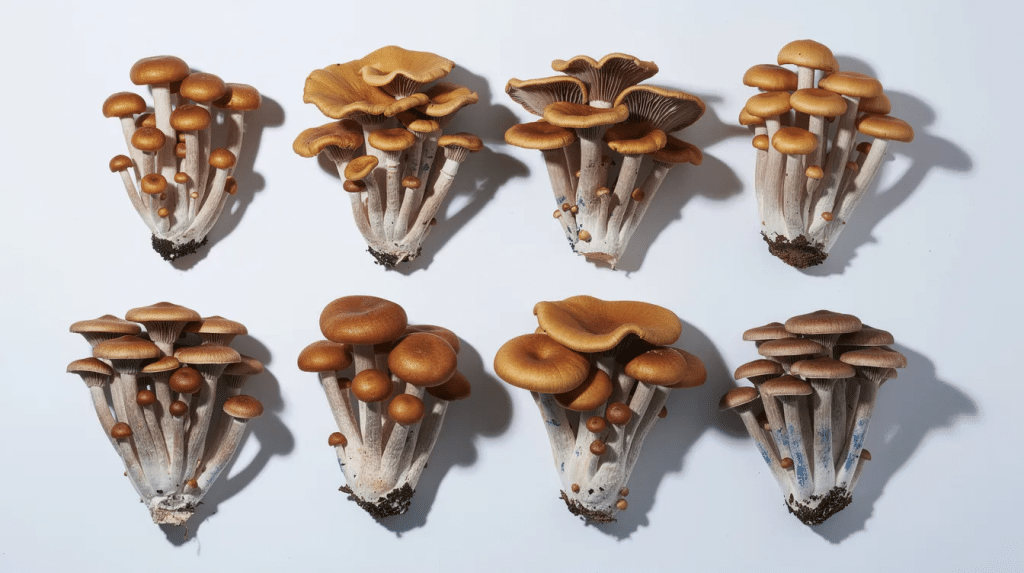
While all psilocybin mushrooms share the same primary active ingredients—psilocybin and psilocin—different strains of Psilocybe cubensis can produce notably distinct experiences. Variations in potency, alkaloid ratios (including minor compounds like baeocystin), and user expectations contribute to these differences. The same species can still surprise you batch to batch.
Golden Teacher remains the most popular strain for beginners. With moderate potency (0.6–0.8% psilocybin), it’s known for balanced, forgiving experiences emphasizing introspection and philosophical insights—many describe it as “teaching” rather than overwhelming. An excellent entry point for those new to taking mushrooms.
Penis Envy carries significantly higher potency (1.5–2.5% psilocybin)—often described as 1.5–2x the strength of standard cubensis. Experiences tend toward intense body sensations, deep ego dissolution, and powerful visuals. This strain is strictly for experienced users comfortable with potentially challenging journeys; starting doses should be halved compared to Golden Teacher.
Tidal Wave is a hybrid of Penis Envy and B+ strains, combining high potency (1.2–2%) with euphoric, wave-like visual effects. A phenotype of Tidal Wave won the 2021 Potency Cup with 3.8% total alkaloids—exceptional even among strong strains. Recommended for those seeking intense but reportedly smooth experiences.
Melmac (a Penis Envy mutation, 1.4–2.2%) offers cerebral euphoria with less reported nausea than its parent strain. Users describe creative insights and emotional openness. Still potent enough to warrant caution for newcomers.
Blue Meanies can refer either to Panaeolus cyanescens (a different species entirely) or a Psilocybe cubensis variety. Clarify what you’re purchasing—true Panaeolus cyanescens contains 1–2.5% psilocybin with fast onset and energetic visuals.
| Strain | Relative Potency | Typical Experience Profile | Suggested User Level |
|---|---|---|---|
| Golden Teacher | 1x (baseline) | Introspective, balanced, forgiving | Beginner |
| Penis Envy | 1.5–2x | Intense visuals, deep ego dissolution, body high | Advanced |
| Tidal Wave | 1.5–2x | Euphoric waves, powerful visuals | Intermediate–Advanced |
| Melmac | 1.5x | Cerebral, creative, less nausea | Intermediate |
| Blue Meanies | 1–1.5x | Energetic, fast onset, visual | Intermediate |
Note that potency is approximate—lab testing (as offered by Canada Shrooms) matters because even the same strain varies 30–50% between batches. Beginners should start with forgiving strains like Golden Teacher at lower doses, while very potent strains require solid safety planning and experienced judgment.
Explore full Magic Mushroom Strain Comparisons →
Safety & Harm Reduction Essentials
No psychedelic use is risk-free. This section is designed to help adults in Canada reduce—not eliminate—potential harms associated with psilocybin mushrooms.
Set and setting form the foundation of safe psychedelic experiences. “Set” refers to your mindset entering the experience: current mood, expectations, unresolved anxieties, and overall mental health. A calm, curious state dramatically lowers bad trip risk. “Setting” means your physical environment—a quiet, familiar space with comfortable furniture, dim lighting, and trusted company reduces anxiety by approximately 40% compared to chaotic or public environments. This principle has been validated across 1960s research and modern clinical trials alike.
Before any session, prepare thoughtfully:
- Eat a light meal or fast lightly (reduces nausea by 30%)
- Weigh your dose accurately with a milligram scale
- Remove hazards from your space (sharp objects, tripping risks)
- Clear your schedule—no driving, no work obligations, no urgent responsibilities
- Have comfort items ready: blankets, water, calming music playlists
Screen for contraindications seriously. Personal or family history of psychosis, schizophrenia, or bipolar disorder significantly increases risk of dangerous behavior or psychotic breaks (relative risk 2–4x). Current use of SSRIs can blunt effects unpredictably; MAOIs create dangerous hypertensive crisis potential; lithium combinations have caused convulsions, exaggerated reflexes, sweating, and seizures. Cardiovascular issues including high blood pressure require caution due to psilocybin’s mild stimulant effects. If pregnant or breastfeeding, avoid entirely—teratogen data is limited. Consult a healthcare provider if any of these apply.
For moderate to high doses, a sober trip sitter is essential. Their role: stay calm and grounded, protect your privacy, handle practical needs (water, temperature, bathroom), and contact emergency services if necessary. They should remain substance-free throughout. Studies suggest a trusted presence halves panic intensity through reassurance alone.
Specific risks to manage:
- Acute panic and paranoia: More common at high doses (2.5g+) or in unstable environments
- Accidents and injuries: Impaired coordination makes stairs, sharp objects, and outdoor settings hazardous
- Rare psychotic reactions: Vulnerable individuals (<1%) may experience breaks requiring medical intervention
- Misidentification when foraging: Toxic lookalikes like Galerina marginata contain deadly amatoxins—never consume wild mushrooms without expert identification; poison control centers report deaths annually from such errors
Lab-tested sources reduce multiple risks. Canada Shrooms provides accurate potency labeling, species verification, and contaminant screening—critical safety measures unavailable with street products or amateur outdoor cultivation. Knowing exactly what you’re consuming and at what dose prevents accidental high doses and exposure to other substances or contaminants.
If a challenging experience arises:
- Change stimuli: switch music, adjust lighting, move rooms
- Practice slow breathing exercises
- Remind yourself and the person: “This is temporary—effects will pass within hours”
- Seek medical attention for severe confusion, chest pain, suicidal thoughts, or inability to recognize reality
Post-experience integration matters for lasting benefit. Journal your insights, discuss with trusted friends or therapists, allow days of rest and reflection before returning to demanding routines. Avoid immediate re-dosing—responsible spacing and processing sustain positive outcomes while minimizing adverse effects.
Read the full Safety & Harm Reduction Guide →

The Latest Psilocybin Research & Science
Scientific interest in psilocybin has surged dramatically since the 2010s, with over 50 clinical trials completed or underway by 2025–2026. What was once considered a counterculture relic now represents one of psychiatry’s most promising research frontiers.
Landmark human clinical findings include the 2016 Johns Hopkins (N=51 cancer patients) and NYU (N=29) studies demonstrating that a single high-dose psilocybin session with therapeutic support produced 80% reductions in cancer-related anxiety and depression at six-month follow-up. More recent Phase II work from COMPASS Pathways (2022, N=233 with major depressive disorder) showed 37% remission with 25mg psilocybin versus 18% with a 1mg control dose—statistically significant but highlighting that response varies considerably.
The U.S. FDA granted psilocybin-assisted therapy Breakthrough Therapy designation for treatment-resistant depression (2018) and major depressive disorder (2019), signaling regulatory recognition of significant potential—though no final approval exists yet. Trials continue exploring applications for obsessive compulsive disorder, tobacco and alcohol substance abuse, PTSD, and cluster headaches.
Brain imaging research illuminates psilocybin’s mechanism. fMRI and MEG studies show reduced default mode network activity (the brain system linked to ego and self-referential thought) alongside increased global connectivity between regions that don’t normally communicate. This neurological signature correlates strongly with subjective reports of ego dissolution, expanded perspective, and emotional breakthrough—explaining, at least partly, why experiences feel so transformative.
Intriguing 2025 Emory University preclinical research suggests psilocin may activate Nrf2 pathways (improving cellular oxidative stress resistance by 25% in neuronal cultures) and reduce senescence markers in rodent models by approximately 20%. These findings hint at potential treatment applications for neurodegenerative disorders or cellular aging. However, this is early laboratory work—not evidence that humans achieve anti-aging benefits from psilocybin use. As the Psychedelic Science Review and drug metabolism reviews emphasize, translation from petri dishes and mice to human longevity remains entirely unproven.
Limitations of current science: Most trials involve small samples (20–200 participants), highly controlled environments, intensive psychological support, and careful screening that differs vastly from real-world use. Separating drug effects from expectation, therapeutic relationship, and placebo remains methodologically challenging. The National Institute on Drug Abuse continues funding research, but definitive answers remain years away.
In Canada, no fully approved psilocybin therapeutic products exist for general use as of 2025–2026. Access comes through clinical trials, Health Canada’s Special Access Program, or rare individual exemptions—entirely separate from gray-market retailers like Canada Shrooms. We provide information and quality-controlled products; we do not provide medical treatment.
Psilocybin in Canada: Legal & Practical Notes
Psilocybin and psilocin remain controlled substances under Canada’s Controlled Drugs and Substances Act (CDSA), classified as Schedule III. Production, sale, and possession are federally illegal, with penalties ranging from summary charges to up to three years imprisonment for indictable offenses. There is no specific exception for microdosing or personal use at the federal level.
The current legal landscape offers limited pathways: clinical trials approved by Health Canada, the Special Access Program (allowing practitioners to request psilocybin for serious conditions), and individual Section 56(1) exemptions granted case-by-case since 2020—initially for end-of-life patients, later expanded to some mental health applications. Alberta’s 2022 announcement to regulate psychedelics for medicinal use from January 2023 (requiring provincial licenses for psychiatrists) represents proactive provincial movement, but remains narrow in scope.
Reality differs from regulation. A robust gray-market ecosystem has emerged, with online dispensaries like Canada Shrooms serving adults across the country. We operate as a direct-to-consumer retailer offering lab-tested dried mushrooms, microdose capsules, and edibles with transparent potency labeling, contaminant screening, and discreet nationwide shipping. This provides dosing accuracy and species verification unavailable through unregulated street sources or risky wild foraging—where toxic lookalikes cause deaths annually. However, customers should understand that purchasing and possessing psilocybin products carries legal risk regardless of source quality.
Local enforcement priorities vary by city and province. Toronto has deprioritized psychedelic cases amid the fentanyl crisis; Vancouver’s 2019 council motion reduced enforcement focus. But policies shift, and users should never assume immunity.
This is not legal advice. For current, personalized guidance on Canadian psychedelic regulations, consult official Health Canada sources or qualified legal professionals.
Frequently Asked Questions About Magic Mushrooms
This FAQ addresses the most common questions Canadian adults ask about magic mushrooms and psilocybin use.
What is a safe starting dose of magic mushrooms for beginners? Most guidance recommends 0.5–1g of dried Psilocybe cubensis for first-time users. This produces mild effects—mood enhancement, subtle visual shifts—without overwhelming intensity. Wait several hours before considering more; never redose impulsively.
How long do magic mushroom effects usually last? Typical duration is 4–8 hours when consuming dried mushrooms orally. Onset occurs 20–60 minutes after ingestion, with peak intensity around 2–3 hours. Tea and lemon tek methods can compress duration to 3–5 hours with faster onset.
What is the difference between microdosing and a full (“macro”) trip? Microdosing involves sub-perceptual amounts (0.05–0.3g) taken every few days for subtle mood or focus benefits without hallucinogenic effects. A macro trip (1g+) produces noticeable psychedelic effects including visual distortions, altered time perception, and emotional amplification.
What is the best magic mushroom strain for beginners? Golden Teacher is widely recommended for newcomers—moderate potency, forgiving character, and introspective rather than overwhelming. Start with 0.5–1g and assess your response before exploring higher doses or more potent strains.
Are magic mushrooms addictive or physically dependent-forming? Psilocybin does not cause physical dependence or withdrawal symptoms. Tolerance builds rapidly (within days of repeated use) and resets after 1–2 weeks of abstinence. However, psychological patterns of overuse can develop, and risk taking behaviour increases with any intoxicating substance.
How often can I safely take psilocybin? For microdosing, common protocols suggest 1–3 times weekly with regular breaks. For full doses, spacing experiences 4–12 weeks apart allows tolerance reset and psychological integration. Frequent high-dose use increases negative consequences including psychological distress.
Can I mix magic mushrooms with alcohol or cannabis? Mixing with other drugs is generally discouraged. Alcohol worsens nausea and can cloud judgment; cannabis intensifies and unpredictably alters psilocybin’s psychoactive effects. Both combinations increase bad trip likelihood and make experiences harder to navigate.
Are magic mushrooms legal in Canada right now? No. Psilocybin and psilocin are Schedule III controlled substances under the CDSA. Exceptions exist only through clinical trials, Special Access Program, or individual exemptions. Gray-market retailers operate, but purchase and possession carry legal risk.
Will psilocybin show up on a standard drug test? Most standard workplace panels (5-panel, 10-panel) do not test for psilocybin. However, specialized tests can detect psilocin metabolites for 24–72 hours in urine. Extended detection is rare but possible with more extensive forensic toxicological relevance screens.
What should I do if I start having a bad trip? Change your environment immediately—switch music, adjust lighting, move to a different room. Practice slow, deep breathing. Remind yourself that effects are temporary and will pass within hours. A sober sitter can provide grounding reassurance. Seek emergency medical help for severe confusion, chest pain, or suicidal thoughts.
Is it safer to grow my own mushrooms or buy them online? Home cultivation remains illegal in Canada and carries contamination risks without proper sterile technique. Lab-tested products from reputable sources like Canada Shrooms offer verified potency and contaminant screening—considerably safer for dosing accuracy than unknown homegrown or wild-foraged options.
Can psilocybin help with depression or anxiety? Clinical trials show promising results (60–80% response rates for depression in supervised settings), and the FDA has granted Breakthrough Therapy status. However, therapeutic use should be medically supervised, not self-administered. Canada Shrooms does not diagnose, treat, or cure mental health conditions. Consult a licensed healthcare provider for mental health concerns.
Conclusion & Next Steps with Canada Shrooms
Magic mushrooms are powerful tools that can offer meaningful experiences, profound insights, and—according to emerging research—potential benefits for mood and perspective. But they also carry psychological, legal, and physical risks that demand respect and preparation. There are no shortcuts to safe exploration.
The key takeaways from this guide: start low and go slow with dosing (0.5–1g for beginners), prioritize set and setting, screen honestly for contraindications, choose lab-tested products over unknown sources, and invest in integration afterward rather than chasing constant peak experiences. Understanding both the potential and the limitations of psilocybin keeps you grounded.
Canada Shrooms exists as a resource for adults who have already decided to explore psilocybin responsibly. We offer lab-tested dried mushrooms, microdose capsules, chocolates, and gummies with clear potency information, secure payment processing, and discreet nationwide shipping. Our commitment to quality control means you know exactly what you’re consuming and at what dose—essential information that reduces harm.
Continue your learning journey through our educational resources:
- Beginner’s Guide to Taking Magic Mushrooms
- Microdosing Basics
- Psilocybin Short Term Effects & Trip Guide
- Psilocybin Long Term Effects & Research
- Magic Mushroom Strain Comparison Guide
- Psilocybin Dosage Guide
- How To Be A Good Trip Sitter
- Complete Set & Setting Guide
- How To Deal With A Bad Trip
- How To Store Magic Mushrooms
- Safety & Harm Reduction
Browse lab-tested magic mushrooms and microdose products at Canada Shrooms →
Final note: Canada Shrooms does not offer medical advice, diagnosis, or treatment for any condition. We do not claim psilocybin provides anti-aging benefits, cures depression, or treats mental health disorders. If you have health concerns, work with licensed healthcare providers. Psilocybin is a serious, optional tool for those who choose informed exploration—not a guaranteed solution to life’s challenges. Approach it with curiosity, caution, and respect.