
Introduction: Why Psilocybin Safety Matters in Canada
Between 2020 and 2025, interest in psilocybin mushrooms across Canada has surged dramatically. This growth has been fueled by compelling clinical research—from Johns Hopkins University’s foundational studies beginning in 2006 through over two decades of clinical trials demonstrating efficacy for depression and end-of-life anxiety. A 2025 Emory University safety review synthesizing data from 50+ trials found serious adverse event rates under 5% in supervised clinical settings, reinforcing psilocybin’s relatively favorable safety profile when used responsibly.
At the same time, gray-market access has expanded rapidly. A 2025 JAMA Network Open analysis found that 77.3% of 22 Canadian psilocybin websites offered products ranging from dried magic mushrooms to capsules and edibles. This accessibility, combined with limited clinical trial availability, means many Canadians are exploring psilocybin outside of medical supervision.
Here’s what the research tells us: psilocybin exhibits low physical toxicity compared with many psychoactive drugs. There’s no evidence of organ damage at typical doses, the LD50 in animal studies exceeds 280 mg/kg (far beyond any human use), and psilocybin shows negligible addiction potential—no withdrawal symptoms or physical dependence have emerged in clinical trials. However, psychological risks are real, especially in unsupervised settings. Acute distress occurs in 10-30% of unsupervised recreational uses versus under 5% in clinical settings.
Legally, psilocybin and psilocin remain Schedule III controlled substances under Canada’s Controlled Drugs and Substances Act (CDSA). Sale, possession, and production are prohibited without authorization. Access is currently limited to clinical trials, Health Canada’s Special Access Program for compassionate use, or rare subsection 56(1) exemptions—though the gray-market online environment continues to grow despite these restrictions.
The good news: harm reduction works. Core principles—preparation, education, and context (set and setting)—can reduce bad trip incidence by up to 70% according to Johns Hopkins guidelines. While no approach eliminates all risk, informed use dramatically improves outcomes.
Canada Shrooms operates as a gray-market online dispensary in Canada, focusing on harm reduction by offering lab-tested psilocybin products (dried mushrooms, microdose capsules, edibles) with verified potency and screening for contaminants like heavy metals and microbes. Our products provide ±10% dosing accuracy compared with wild or untested sources where potency can vary 5-10x.
Important Disclaimer: This guide is for informational purposes only—not medical or legal advice. It is intended for adults 19+ in Canada. If you have medical or psychiatric conditions, or take any medications, consult a licensed healthcare professional before considering psilocybin use. Products from Canada Shrooms are lab-tested for potency and purity, but unsupervised use always carries risk that cannot be fully eliminated.
The rest of this article provides a practical magic mushrooms safety guide, covering psilocybin risks for beginners, set and setting psilocybin principles, drug interactions, and concrete harm reduction strategies specific to the Canadian context. This article is focused on recreational use at higher doses. For safety tips regarding microdosing, check out our Microdosing Safety article.
Quick Reference Table: Key Risks & Mitigation Strategies
Before diving into detailed explanations, use this at-a-glance table to quickly understand the main psilocybin risk categories and high-level harm reduction tips. Bookmark this section for fast reference.
| Risk Category | Description / Likelihood | Who Is Most Vulnerable | Harm Reduction Tips |
|---|---|---|---|
| Acute psychological distress / “bad trip” | Panic, paranoia, extreme fear, sense of dying; affects ~23% of recreational users (Global Drug Survey 2023-2025) | First-time users, anxious individuals, those in unstable emotional states | Have a sober trip-sitter; start with low dose (0.5-1g dried); use calm, familiar setting |
| HPPD / visual flashbacks | Persistent visual disturbances (trails, halos, visual snow); occurs in 0.1-4.2% of lifetime psychedelic users | Frequent/high-dose users, those with family history of schizophrenia | Cease all psychedelic use if symptoms appear; seek clinical evaluation promptly |
| Prolonged adverse experiences | Weeks of anxiety, depression, emotional instability; 5-10% post-trip (2022 meta-analysis) | People with trauma history, those lacking integration support | Arrange integration therapy; journal experiences; seek professional help if symptoms persist |
| Cardiovascular effects | Transient HR increase 20-40 bpm, BP +10-20 mmHg during experience | Those with hypertension, heart disease, or cardiovascular conditions | Pre-screen blood pressure; avoid stimulants; consult physician if you have heart conditions |
| Drug interactions | SSRIs blunt effects in 50-80%; lithium linked to seizures; MAOIs intensify and prolong effects | Anyone on psychiatric medications, mood stabilizers, or MAOIs | Consult prescriber before use; never stop medications abruptly to trip |
| Misidentification / poisoning | 20+ toxic species (Amanita, Galerina) mimic Psilocybe in Canada; amatoxin liver failure has 10-20% mortality untreated | Wild foragers, those relying on internet photos for identification | Only use lab-tested products; never forage without expert mycologist training |
| Set and setting issues | ~40% of bad trips linked to poor environment (surveys) | Beginners, festival/party users, those in chaotic or unfamiliar spaces | Choose quiet, familiar indoor space; avoid crowds and high-stimulation environments |
| Integration challenges | ~15% report emotional volatility weeks after intense experiences | Those without support systems or processing tools | Journal after trips; seek integration therapy; take quiet time before returning to stress |
| Co-use with other substances | Polydrug use triples ER visits; accounts for 70% of psychedelic hospitalizations | Party/festival users, those mixing alcohol, stimulants, or other psychedelics | Use psilocybin alone; avoid alcohol, cocaine, MDMA, or other drugs during sessions |
| Pre-existing mental health conditions | 5-10x psychosis risk with family history of schizophrenia/bipolar (2024 Lancet review) | Those with personal/family history of psychotic disorders, bipolar I, severe PTSD | Avoid unsupervised use; consider only supervised clinical settings if appropriate |
Understanding Psilocybin Risks
Physical Safety Profile
Psilocybin’s physical safety profile is remarkably favorable compared with many other psychoactive drugs. Modern clinical studies from Johns Hopkins and other institutions (2010-2024, n>1000 doses) report no evidence of organ damage at typical doses. The LD50 in animal studies is estimated at over 280 mg/kg—more than 100 times any recreational dose humans would take.
Common short-term physical effects include:
- Nausea and vomiting (20-40% of users, typically peaking 30-60 minutes after magic mushroom ingestion)
- Increased heart rate (+20-40 bpm) and elevated blood pressure (+10-20 mmHg)
- Dilated pupils (mydriasis)
- Changes in body temperature (up to 1°C increase)
- Muscle tension, weakness, or tremors
- Headaches following the experience (10-20% of users)
- Stomach discomfort, especially with dried mushrooms
Serious physical complications remain rare in healthy individuals. However, risk increases significantly for those with cardiovascular disease, uncontrolled hypertension, or other heart conditions—a 2025 Emory review flagged approximately 2x elevated risk in hypertensive individuals. These groups should avoid unsupervised psilocybin use and consult a physician.
Psilocybin also impairs coordination and judgment, with psychomotor deficits comparable to 0.05% blood alcohol content lasting 12-24 hours. This creates a 3-5x elevated risk of accidents. Stay indoors or in a safe, controlled environment, and avoid driving or operating machinery for at least 12-24 hours after use.
Lab-tested products like those from Canada Shrooms reduce risks related to dose variability and contamination. Wild or untested mushrooms show potency ranging from 0.2-2% psilocybin, while lab-tested products standardize to ±10% accuracy—a significant safety improvement.
Psychological & Psychiatric Risks
Clinical trials consistently report positive or neutral psychological outcomes in 80-90% of participants under controlled conditions with proper preparation. However, recreational or unsupervised use shows distress rates of 20-40% according to Erowid and Reddit aggregates from 2020-2025.
What a “bad trip” can look like:
- Intense fear, panic attacks, or extreme anxiety
- Paranoia or sense of persecution
- Feeling of dying, going insane, or losing control permanently
- Intrusive traumatic imagery or overwhelming negative emotions
- Time distortion where minutes feel like hours
- Visual and auditory hallucinations that feel threatening
These experiences can feel absolutely real during the four to six hours of peak effects, even though they are temporary. The experience duration typically involves 2-4 hours of peak intensity within a 4-6 hour total experience.
Prolonged or delayed adverse reactions affect some users with days or weeks of anxiety, insomnia, depressive symptoms, derealization, or emotional instability. This is particularly common in people with prior mental health issues or trauma history, occurring in approximately 5-10% of users.
Psychosis risk represents a serious concern for specific populations. Large surveys suggest low absolute risk in the general population, but a 2024 Lancet twin study review found an odds ratio of 5.7 for psychosis in those with schizophrenia predisposition. People with personal or family history of psychotic disorders, schizophrenia, schizoaffective disorder, or bipolar I should strongly avoid psilocybin use outside of closely supervised clinical settings.
HPPD risks psilocybin users should understand: Hallucinogen Persisting Perception Disorder involves visual disturbances—trails, after-images, halos around lights, visual snow—that persist beyond the trip. This affects 0.1-4.2% of lifetime psychedelic users, with psilocybin implicated in 15-20% of cases according to 2024 reviews. Persistent symptoms lasting weeks or months require prompt clinical assessment and are not “just integration.”
Using psilocybin during periods of acute stress, grief, trauma, or unstable mood amplifies psychological distress by 2-3x. Postpone use until you’re emotionally more stable and have adequate support. Check out our How To Manage A Bad Trip article for tips and advice on dealing with a “bad trip”.
Drug Interactions & Contraindications
Psilocybin primarily affects the serotonin system through 5-HT2A receptor agonism, creating potential for interactions with other serotonergic or psychotropic medications.
Lithium represents a critical contraindication. Case reports spanning 1970-2025 document seizures, ataxia, and severe neurological reactions when combining classic psychedelics with lithium. This appears related to cerebellar synergy effects. Completely avoid psilocybin while taking lithium unless under strict medical supervision—this is one of the most serious psilocybin drug interactions.
SSRIs and SNRIs (including fluoxetine, sertraline, venlafaxine, and similar antidepressants) blunt psilocybin effects in approximately 60% of users through tryptophan depletion and reduced 5-HT2A receptor availability. While rare, serotonin-related complications (heart rate and blood pressure spikes) can occur. Discuss with your prescriber before attempting psilocybin use, and never stop antidepressants abruptly just to trip—this creates its own serious risks.
MAOIs (prescription or plant-based like ayahuasca admixtures) dramatically increase and prolong psychedelic intensity while elevating risk of hypertensive crisis through catecholamine surge. Intensity can increase 3-5x. Avoid this combination unless under expert supervision.
Benzodiazepines and antipsychotics can reduce or abort a trip through GABA activity (benzos) or 5-HT2A blocking (antipsychotics). These are sometimes used clinically to manage overwhelming experiences, but combining them recreationally without guidance carries its own risks.
Combining psilocybin with alcohol, stimulants, MDMA, or other psychedelics creates unpredictable psychological and cardiovascular strain. Polydrug use accounts for approximately 70% of psychedelic-related hospitalizations and multiplies ER visit risk by 4x.
If you’re on prescription medications, speak with your doctor or pharmacist about potential psilocybin interactions. Don’t assume clinicians will always approve or be familiar with this topic, but the conversation is essential.
Other Hazards & Special Populations
Misidentifying wild mushrooms poses a serious threat in Canada. Over 20 toxic species—including Galerina marginata (containing deadly amatoxins) and various Amanita species—can mimic psilocybin mushrooms in appearance. Amatoxin poisoning causes liver failure with 10-20% mortality if untreated. Canada sees 5-10 annual mushroom poisoning cases requiring medical attention.
Never forage for hallucinogenic mushrooms unless trained by a qualified mycologist. Photos from the internet are insufficient for safe identification. Purchasing known, lab-tested products eliminates this potentially fatal risk entirely. Always contact poison control centers immediately if mushroom poisoning is suspected.
Pregnancy and breastfeeding are absolute contraindications. Psilocin crosses the placenta, and animal studies show HPA axis disruption in offspring. No human safety data exists. Psilocin also appears in breast milk. Avoid completely during pregnancy and breastfeeding.
Adolescents and young adults under 19 may be particularly vulnerable to psychological harms and potential brain development impacts given the still-developing prefrontal cortex. Research shows 25% higher HPPD and psychiatric risk in this group. Canada Shrooms content and products are for adults 19+ only.
Legal and social risks remain significant. CDSA violations can result in summary conviction (up to 18 months, $5000 fine) or indictable charges (up to 3 years). Employment consequences, travel seizures, and international border issues are common. Never carry psilocybin across borders and understand local laws.
Core Harm Reduction Principles
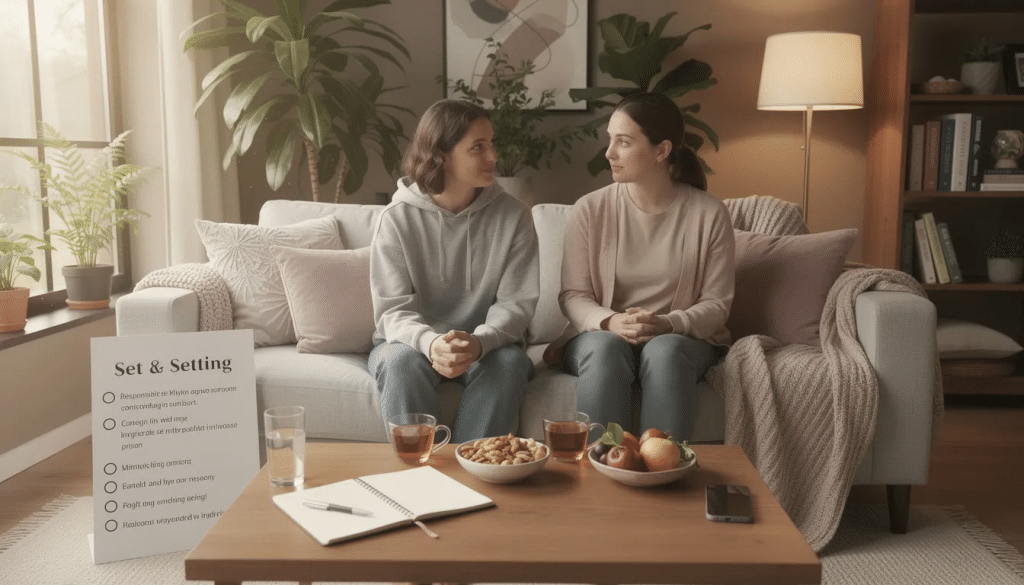
Set & Setting: Foundation of Safer Psilocybin Use
The concepts of “set” (mindset) and “setting” (environment) have been central to psychedelic safety since Timothy Leary’s 1964 framework, validated extensively through Johns Hopkins safety protocols from 2008 onward. Modern harm reduction practice continues to emphasize these as the foundation of safe magic mushroom use Canada.
Set (Mindset): Before taking magic mushrooms, honestly assess your current emotional state. Avoid sessions when feeling highly anxious, emotionally unstable, or in crisis. Wait for a calmer period. Clarify your intention for the experience—even something simple like “I want to explore my creativity” or “I’m seeking emotional release” can help ground the experience.
Setting (Environment): For beginners, the ideal physical surroundings include:
- A quiet, familiar indoor space (your home or a trusted friend’s)
- Limited number of trusted people present
- Soft, adjustable lighting
- Comfortable seating or bed access
- Calming music playlist prepared in advance
- Easy access to water, bathroom, and blankets
Avoid first-time use at festivals, crowded parties, or chaotic environments. Research shows panic risk increases approximately 300% in high-stimulation settings. The difference between a profound experience and a traumatic one often comes down to these environmental factors.
For a deeper dive into preparation, check out our how to take magic mushrooms for beginners guide.
Dosage & Start Low, Go Slow
Dose is one of the strongest predictors of both positive and challenging outcomes. Beginners consistently underestimate mushroom potency, especially with strong strains like Penis Envy or concentrated edibles.
General dried Psilocybe cubensis ranges (sensitivity varies widely):
| Dose Category | Dried Weight | Expected Experience |
|---|---|---|
| Microdose | 0.05-0.3g | Sub-perceptual, subtle mood effects |
| Low dose | 0.5-1g | Mild alterations, enhanced senses |
| Moderate | 1-2.5g | Clear hallucinogenic effects, altered thinking |
| Strong | 2.5-5g+ | Intense visuals, potential ego dissolution |
For first-time users in Canada: Start with a low dose from a single, known batch (such as a lab-tested Canada Shrooms product). Wait the full 2 hours before considering any redose—psilocybin works slower than many expect, and impatience leads to accidental overdosing.
Standardized microdose capsules and clearly labeled edibles help reduce dosing errors compared with eyeballing dried mushrooms or relying on informal advice. Our detailed dosage guide provides strain-specific information, but remember this safety article should not be used as a personalized dosing prescription.

Preparation & Screening Yourself Honestly
Honest self-assessment is critical before psilocybin use. Ask yourself:
Mental health history screening:
- Do I have a personal or family history of psychosis, schizophrenia, or schizoaffective disorder?
- Do I have bipolar I disorder?
- Am I currently experiencing severe depression, anxiety disorders, or PTSD symptoms?
- Do I have a history of substance abuse or substance use disorders?
If you answer yes to any of these, avoid unsupervised psilocybin entirely. If you’re still interested, consider only medically supervised clinical settings or research trials.
Physical health screening:
- Do I have cardiovascular disease or uncontrolled high blood pressure?
- Do I have a seizure disorder?
- Am I pregnant or breastfeeding?
- Do I have other high-risk medical conditions?
Medication review: Review all current medications and supplements for potential interactions—antidepressants, mood stabilizers, antipsychotics, heart medications, MAOIs, and even some supplements can interact with psilocybin.
Practical preparation steps:
- Plan your dosage and timing (daytime on a free day works well)
- Eat lightly 4 hours beforehand
- Stay hydrated
- Prepare blankets, water, easy bathroom access
- Silence phones and minimize potential interruptions
- Arrange childcare or pet care if necessary
- Inform trusted housemates of your plans
During the Experience: Support & Grounding
For beginners, a sober, trusted trip-sitter provides invaluable support. The sitter’s role includes:
- Staying present without controlling or steering the experience
- Monitoring physical safety
- Providing calm reassurance when needed
- Helping with basic needs (water, bathroom, temperature, music)
- Having emergency contact information ready
Grounding techniques for difficult moments:
- Focus on slow, deep breathing (4 counts in, 7 hold, 8 out)
- Feel the weight of your body on the couch or floor
- Hold a comforting object (soft blanket, smooth stone)
- Change to a calmer room or adjust lighting
- Put on soothing, familiar music
Language sitters can use: “You’re safe. This is temporary. The substance will wear off. I’m here with you. Difficult feelings often pass like waves—let them move through you.”
Red flags requiring emergency response:
- Chest pain or severe breathing problems
- Seizures
- Dangerous behavior toward self or others
- Severe protracted psychosis-like symptoms unresponsive to reassurance
In these cases, call 911 immediately. Tell responders clearly: “This person took approximately [X grams] of psilocybin mushrooms [X hours] ago.” Clear communication helps emergency department staff provide appropriate care.
Never drive, cycle, or make major decisions (financial, relationship, legal) during or immediately after a trip, even if you “feel fine.” Impairment persists longer than subjective awareness suggests.
Integration & Aftercare
Integration—the process of making sense of the experience and applying insights in everyday life—may be as important as the experience itself. Good integration reduces confusion and emotional turbulence afterward.
Practical integration tools:
- Journal within 24-48 hours while memories are fresh
- Discuss the experience with a trusted friend or support group
- Consider working with a therapist open to psychedelic-related topics
- Take quiet time over the following days before jumping back into high-stress obligations
Gentle self-care priorities:
- Adequate sleep (7-9 hours)
- Hydration and nutritious food
- Light movement and time in nature
- Avoiding alcohol and other substances
Warning signs requiring professional attention:
- Ongoing anxiety, depression, or panic lasting more than 2-4 weeks
- Intrusive memories or nightmares
- Persistent derealization or depersonalization
- Visual disturbances (potential HPPD)
- Difficulty functioning at work or in relationships
Don’t assume prolonged distress is “just integration.” Canada Shrooms supports harm reduction and encourages seeking licensed mental health support, including clinicians familiar with psilocybin assisted therapy models when available.
Avoiding Common Pitfalls
Common mistakes to avoid:
- Taking too high a first dose
- Redosing too soon (before 2 hours)
- Using in chaotic social environments or festivals
- Combining with alcohol, stimulants, or other drugs
- Ignoring personal or family mental health history
- Using too frequently without integration time
Spacing sessions: Many community guidelines and clinical protocols suggest waiting at least 2-4 weeks between full psychedelic doses. This allows for proper integration and psychological recovery. Tolerance develops rapidly—repeated use over several days dramatically reduces effects while potentially increasing emotional exhaustion.
Respecting the substance: Treating psilocybin more like a serious therapeutic tool than a casual party drug consistently correlates with lower harm and more positive long-term outcomes. This isn’t about being overly reverent—it’s about practical risk reduction.
Special Considerations
For Beginners
If you’re trying psilocybin or magic mushrooms for the first time, extra caution is warranted:
- Choose a low dose (0.5-1g dried cubensis)
- Use a safe, familiar indoor setting
- Have a sober, trusted sitter present
- Clear your schedule for the day and following morning
Starting with standardized, lab-tested products from Canada Shrooms rather than random street mushrooms of unknown strain and potency significantly reduces unpredictability. You’ll know exactly what you’re taking.
Read our comprehensive beginners guide before your first session. It covers preparation checklists, what to expect, and mental readiness assessment.
One crucial point: avoid making significant life decisions based on a single first experience. Insights can feel profound but may benefit from weeks of reflection and integration with a clear, sober mind before acting on them.
For Older Adults & Those With Health Conditions
Adults over 50 or those with chronic health conditions face additional considerations:
- Cardiovascular stress from psilocybin (blood pressure and heart rate increases) may be more pronounced—approximately 1.5x greater response in older adults
- Chronic conditions like diabetes, kidney disease, or liver disease may affect metabolism and risk profiles
- Consult a physician beforehand and consider basic screening (blood pressure check, heart function assessment, medication review)
Polypharmacy risks: Older adults are more likely to be on multiple medications—antidepressants, blood thinners, heart medications—that could interact with psilocybin. A thorough medication review with a healthcare provider is essential.
Recommendations for this population:
- Lower starting doses than typical guidelines
- Calm, controlled settings only
- Never use alone—a sober sitter who can monitor for unusual physical symptoms is crucial
- Have emergency contact information readily available
Microdosing vs Macrodosing: Different Safety Profiles
Microdosing involves very small, sub-perceptual doses (typically 0.05-0.3g) taken on a schedule (such as one day on, two days off). Macrodosing means full psychedelic doses producing clear alterations in consciousness.
These approaches carry different risk profiles:
| Aspect | Microdosing | Macrodosing |
|---|---|---|
| Acute intensity | Low/none | High |
| Frequency | Regular (2-4x weekly) | Occasional (monthly or less) |
| Acute psychological risk | Lower per session | Higher per session |
| Long-term effects | Unknown (research ongoing) | Better studied |
| Integration needs | Minimal per session | Significant |
While microdosing may seem inherently safer, repeated chronic exposure without medical oversight carries its own concerns—especially for people with mood disorders or on antidepressants. Long-term effects of regular microdosing remain under active study with no definitive safety data beyond one year.
Our microdosing safety guide covers schedules, dose calibration, and when to pause or stop.
If microdosing, maintain regular self-check-ins: monitor mood, sleep quality, anxiety levels, and daily functioning. Stop and consult a professional if negative changes appear.
Canada-Specific Notes
Canadian legal status: Psilocybin remains a Schedule III controlled substance under the CDSA. Legal access is currently limited to:
- Clinical trials (limited availability)
- Health Canada’s Special Access Program for compassionate use
- Rare subsection 56(1) exemptions (over 50 granted through TheraPsil support by 2025)
Despite growing public interest and promising results in treating depression and other mental health problems, no approved therapeutic psilocybin products currently exist in Canada.
Gray-market considerations: The difference between sources matters significantly:
- Untested mushrooms may be inaccurately dosed (potency SD ~50%), contaminated, or mislabeled
- Canada Shrooms provides lab-tested products with potency verification (±10% accuracy), contaminant screening, clear labeling, and discreet, secure shipping within Canada
Wild foraging dangers: Canadian regions (BC, Ontario, Quebec) host numerous toxic look-alike species. Quebec alone has roughly 10x more look-alike species than actual psilocybin mushrooms. Never rely solely on internet photos for identification. Unless you have expert mycologist training, don’t forage—the risk of fatal poisonous mushrooms consumption isn’t worth it.
Practical harm reduction in Canada:
- Keep products in discreet, secure storage
- Never share with minors
- Lock away all psilocybin products from children and pets
- Dispose of packaging responsibly
- Be aware of workplace drug testing policies
What to Do If Things Go Wrong
Difficulties can happen even with thorough preparation. Knowing how to respond is a core part of harm reduction.
Acute in-trip emergencies requiring immediate medical attention:
- Severe chest pain or trouble breathing
- Seizures
- Violent behavior toward self or others
- Unresponsiveness
Call 911 immediately. Tell responders: “This person took [approximate dose] of psilocybin mushrooms [X hours] ago.” This information helps guide appropriate treatment.
What sitters can do while waiting for help:
- Keep the person safe from falls or self-injury
- Position them on their side if vomiting (to prevent choking)
- Speak calmly and reassuringly
- Avoid physical restraint unless absolutely necessary for safety
- Don’t leave them alone
Signs of post-trip problems requiring professional support:
- Persistent anxiety or depression lasting more than 2-4 weeks
- Ongoing derealization or depersonalization
- Intense nightmares or intrusive traumatic memories
- Difficulty functioning at work, school, or in relationships
HPPD warning signs:
- Ongoing visual snow (static-like patterns)
- Persistent halos around lights
- After-images that don’t fade normally
- Trailing effects behind moving objects
- Geometric patterns appearing on surfaces
If these persist beyond a few days, see an eye doctor or neurologist/psychiatrist and report all hallucinogenic substance use honestly.
Avoid dismissive online communities: Some forums minimize serious symptoms as “just integration” or “ego death.” If you’re experiencing ongoing distress, seek licensed mental health care rather than relying on unqualified advice. Some symptoms represent genuine mental disorders requiring professional intervention.
Canada Shrooms supports responsible drug use and encourages customers to prioritize their well-being by seeking medical or psychological help promptly when needed. Further research continues to improve our understanding, but current symptoms deserve current attention.
Frequently Asked Questions (Magic Mushroom Harm Reduction FAQ)
Is psilocybin safe for beginners? No substance use is entirely risk-free. Beginners with personal or family history of psychosis, bipolar disorder, or those on interacting medications should avoid psilocybin. For others, safer use involves: low dose (0.5-1g), calm familiar setting, sober trip-sitter, and lab-tested products. This significantly reduces—but doesn’t eliminate—risk.
Can you die from magic mushrooms? Death from psilocybin toxicity alone is extremely rare at typical human doses—psilocybin is not considered psilocybin addictive and has remarkably low physiological toxicity. However, deaths do occur from misidentified poisonous mushrooms (amatoxin poisoning), accidents during impaired states, or polydrug combinations. These risks are preventable with proper harm reduction.
What are signs of a psilocybin “bad trip” and how can I reduce the risk? A bad trip typically involves extreme fear, panic attacks, paranoia, terrifying auditory hallucinations or visuals, or feeling trapped in the experience. Prevention includes: careful dose selection, stable mindset, safe environment, and an experienced sitter. During a difficult experience, breathing techniques, reassurance that effects are temporary, and changing the immediate environment often help.
What are signs of HPPD from psilocybin? HPPD involves visual disturbances—trails, halos, visual snow, geometric patterning—that persist beyond the trip and interfere with daily life. If you experience ongoing visual changes lasting more than a few days after use, stop all psychedelic use immediately and consult a healthcare professional.
Can psilocybin interact with my antidepressants or other medications? Yes. SSRIs may blunt effects, and rare serotonin-related interactions can occur. Lithium poses serious seizure risk. MAOIs dramatically intensify effects and create dangerous complications. Never stop medications abruptly to use psilocybin—consult your prescriber first. Recreational use combined with other drugs creates unpredictable negative consequences.
How do I choose a safe set and setting for magic mushrooms? Key criteria include: stable mood and clear intention; quiet, private, familiar space; small group of trusted people (or solo with sitter); no obligations for 24+ hours afterward; and prepared supplies (water, blankets, calming music). See our beginner’s set and setting guide for detailed preparation.
Why do lab-tested psilocybin products matter in Canada? Potency and contamination vary dramatically in unregulated markets—wild mushrooms containing psilocybin can range from 0.2-2% potency. Lab-tested products from Canada Shrooms provide reliable dosing information (±10% accuracy) and screening for harmful contaminants like heavy metals and microbes, supporting meaningful harm reduction.
How often is it safe to take psilocybin? There’s no universal “safe” schedule, but clinical practices typically involve single or few sessions separated by weeks or months. Community guidelines suggest leaving several weeks between full doses to allow integration and reduce psychological strain. Tolerance develops rapidly with frequent use.
Is microdosing safer than taking a full psychedelic dose? Microdosing has a different risk profile: less acute intensity but more frequent exposure. Long-term effects remain unknown, and people with mood disorders or on antidepressants face specific concerns. Cautious experimentation, regular self-monitoring, and medical consultation are recommended for microdosing psilocybin users.
What should I do if I regret taking mushrooms or feel off for days afterwards? Pause all psychedelic use immediately. Focus on basics: sleep, nutrition, hydration, gentle routine. Journal your experiences and feelings. If distress persists or escalates beyond 2-4 weeks, seek professional help—this isn’t failure, it’s responsible self-care. Traditional ceremonies and psilocybin assisted therapy contexts provide integration support that recreational use often lacks.

Conclusion & Next Steps (Canada Shrooms Harm Reduction Commitment)
Psilocybin mushrooms can be powerful tools offering meaningful experiences and potential treatment for conditions like major depression, cancer patients facing end-of-life anxiety, post traumatic stress disorder, obsessive compulsive disorder, and treating depression symptoms. Ongoing clinical trials at institutions like the National Institutes of Health continue exploring this therapeutic potential. But these naturally occurring psychedelic compound substances also carry real psychological, social, and legal risks—especially when used carelessly in an unsupervised environment.
Harm reduction isn’t about claiming psilocybin is completely safe. It’s about informed, cautious, and respectful use: understanding psilocybin risks for beginners, carefully planning set and setting psilocybin experiences, choosing appropriate doses, avoiding risky combinations with other drugs, and prioritizing integration and mental health support afterward.
Explore related Canada Shrooms guides:
- Psilocybin Dosing Guide
- Long-Term Effects of Psilocybin
- Magic Mushroom Strain Comparison
- Microdosing Best Practices
- Beginner’s Complete Guide
For those who choose to use psilocybin, opting for lab-tested Canadian products—dried mushrooms, microdose capsules, and edibles—with clear potency information and discreet shipping represents a practical harm reduction choice over unknown street products.
Canada Shrooms remains committed to education, product quality, and supporting safer, more informed decisions around psilocybin use in Canada. We don’t make medical treatment claims—that’s for clinical research and licensed healthcare providers. What we do provide is accurate information, consistent products, and resources to help you make decisions aligned with your own values and risk tolerance.
The path to safer psychedelic use starts with knowledge. You’ve taken that first step.