
Choosing between psilocybin extract and ground mushroom powder for gummies affects potency consistency, shelf stability, taste profile and manufacturing complexity. The right choice depends on your quality standards, budget considerations and desired user experience.
Below is a practical comparison of extracted versus ground mushroom products in edible applications.
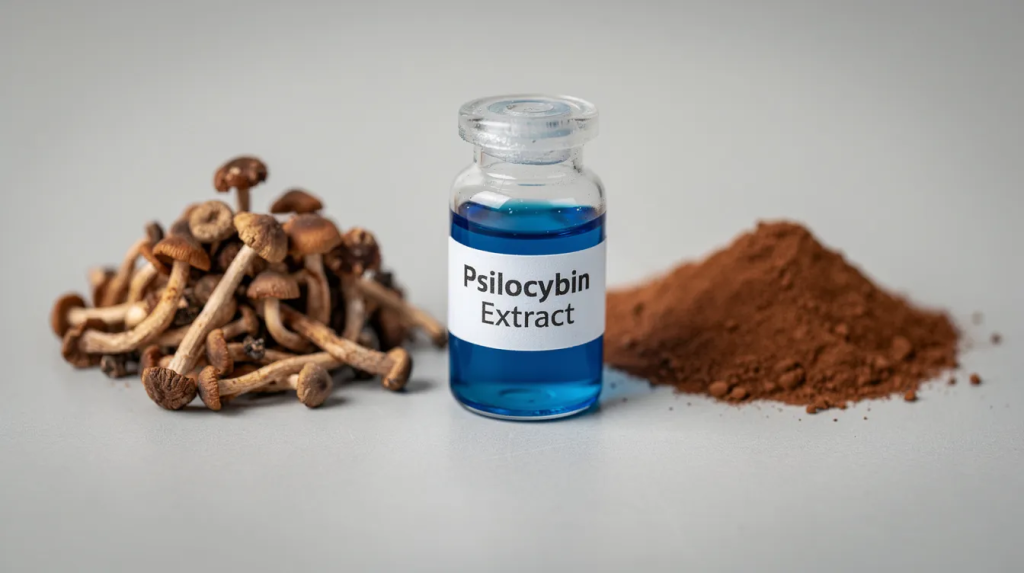
Psilocybin Extract vs. Ground Mushrooms: Key Differences
The fundamental distinction centers on processing depth and compound isolation.
- Extracted psilocybin offers standardized potency through psilocybin extraction processes that concentrate psychedelic compounds
- Ground mushroom products retain full-spectrum intracellular compounds including baeocystin, norbaeocystin and aeruginascin
- Extract-based gummies provide cleaner taste profiles and extended shelf stability
- Mushroom powder products preserve naturally occurring compound ratios and potential entourage effects
- Manufacturing requirements differ significantly, with extraction method complexity versus simple grinding operations
Both approaches can produce effective psilocybin containing mushrooms products, but the production pathways and end results vary considerably.
Potency and Consistency
Accurate dosing is essential for safe consumption of psychedelic substances, creating distinct challenges for each approach.
Psilocybin Extract Products
Mushroom extract concentrates typically achieve psilocybin concentration levels of 2.5-3.2% through successful extraction processes. This represents a significant increase over raw mushroom material, enabling precise formulation of jelly bombs and gummies at specific dosages (2.5mg, 5mg, 10mg per piece).
High performance liquid chromatography and mass spectrometry provide analytical methods for potency testing before production. Batch-to-batch consistency ensures predictable psychedelic effects for consumers, with quality control protocols confirming exact psilocybin and psilocin levels in extracted materials.
Extract psilocybin products allow manufacturers to calculate dosing with mathematical precision rather than statistical analyses of variable raw materials.
Ground Mushroom Products
Dried mushrooms from species like psilocybe cubensis naturally contain 0.5-1.5% psilocybin content depending on mushroom species, cultivation conditions and harvest timing. The mushroom cap typically shows higher concentrations than stems, adding another layer of species differences to account for.
This natural variation requires extensive testing of each mushroom material batch. Dosing calculations must accommodate fluctuating psilocybin levels, with some batches varying by more than 50% in total psychedelic compounds.
Seasonal factors, substrate quality and storage conditions all affect consistency in ground magic mushrooms products, making accurate dosing more challenging at scale.
Stability and Shelf Life
Product longevity directly impacts consumer satisfaction, inventory management and compound degradation rates.
Extract-Based Formulations
Pure psilocybin extracts demonstrate stability for 12-18 months when stored in a sealed container under appropriate temperature control. The extraction efficiency of modern techniques removes plant matter, enzymes and moisture that accelerate degradation in whole mushroom samples.
Crystalline psilocybin resists oxidation better than psilocin present in natural hallucinogenic mushrooms. By removing the phosphate group through controlled processing, manufacturers can protect psilocin from rapid breakdown while maintaining therapeutic effects.
Extended shelf life reduces waste and improves cost efficiency across the production cycle. Extracted compounds in gummies face fewer stability challenges from the gelatin mixture or pectin matrix.
Ground Mushroom Formulations
Mushroom powder products typically maintain potency for 6-12 months under optimal storage. Research shows significant difference in degradation rates, with poorly stored dried mushrooms losing 40-50% of psychedelic compounds over six months.
Plant fibers and organic matter promote compound degradation in humid conditions. Psilocin levels decline faster than psilocybin due to oxidation sensitivity, altering the expected behavioral effects over time.
Shorter shelf life requires faster inventory turnover and careful storage protocols for ground psychedelic mushrooms products.
Manufacturing and Quality Control
Production complexity affects scalability, consistency and regulatory compliance in commercial applications.
Extract Manufacturing Process
Psilocybin extraction requires specialized equipment including ultrasonic assisted extraction systems, rotary evaporators and chromatographic columns. The extraction method typically involves polar solvents like methanol acidified with citric acid or acetic acid, sometimes with hydrochloric acid for pH adjustment.
Multiple extraction cycles improve solvent penetration into cellular structures, maximizing compound recovery of polar compounds from mushroom material. The solvent to material ratio must be optimized for extraction efficiency while minimizing residual solvent concerns.
This improves solvent penetration and enables the most efficient technique for isolating psychedelic compounds. Higher upfront investment in equipment yields simplified downstream manufacturing with consistent extracted materials.
Quality control testing through analytical methods confirms purity before incorporation into gummy formulations.
Ground Mushroom Processing
Simple grinding and sieving equipment meets basic processing requirements for mushroom powder production. Lower capital investment creates fewer barriers to entry-level production operations.
However, each batch requires individual potency testing and dosing adjustments. Variable mushroom characteristics from different growing conditions complicate large-scale manufacturing consistency.
Further analysis of each production run becomes necessary, adding time and cost to quality control protocols that extract-based operations largely avoid.
Taste and Consumer Experience
Flavor profiles significantly impact product acceptance and satisfaction across psilocybin mushrooms edibles.
Extract-Based Gummies
Purified extracts eliminate the earthy, bitter flavors characteristic of raw psychedelic mushrooms. The clean taste profile allows fruit flavors to dominate the gummy experience without competing with mushroom notes.
Smooth texture results from removing plant matter and fiber particles during extraction. This appeals to consumers sensitive to natural mushroom taste who still seek potential therapeutic benefits.
The gelatin mixture or pectin base incorporates extracted materials evenly, creating consistent texture throughout each piece.
Ground Mushroom Gummies
Natural mushroom flavor requires stronger masking agents including chocolate, berry or citrus profiles. Some consumers prefer this authentic taste for a traditional experience connecting them to the whole mushroom source.
Fibrous texture may create grittiness in final gummy products. Color variations from natural mushroom pigments affect visual consistency across batches.
Formulation challenges exist but can be managed with appropriate flavor engineering and blending techniques.
Cost and Production Considerations
Economic factors influence product pricing, market positioning and production decisions.
Extract Production Economics
Higher processing costs reflect extraction equipment requirements, laboratory testing and skilled labor needs. Quality control through high performance liquid chromatography adds ongoing analytical expenses.
Premium pricing finds justification in consistent quality, extended shelf life and accurate dosing capabilities. Scalable production with predictable yield calculations enables efficient operations once processes are established.
Reduced waste from spoilage and inconsistent batches offsets higher initial investment over time. Cost per milligram of active compound often proves competitive despite higher processing expenses.
Ground Mushroom Economics
Lower processing costs enable competitive pricing for budget-conscious consumers seeking magic mushrooms products. Simple equipment requirements reduce barriers to market entry.
Higher waste potential exists from batch variability and shorter shelf life considerations. Volume purchasing from reliable mushroom suppliers can offset some inconsistency through averaging across larger quantities.
Production economics favor ground mushroom approaches for lower-volume operations or markets prioritizing price over precision.
Product Type Applications
Different formulations suit various product categories and consumer preferences across the psychedelic substances market.
- Gummies benefit most from extract consistency for precise micro-dosing (1-2.5mg), similar to how cannabis extract enables accurate THC dosing
- Chocolates can mask mushroom flavors effectively, making ground mushroom viable for this format
- Tinctures work well with both extracts and alcohol-based mushroom preparations
- Drink mixes favor extracts for better dissolution and flavor compatibility in beverages
- Capsules accommodate either approach but extracts offer more precise dosing for clinical research applications
The emerging interest in psilocybin for treatment resistant depression, major depressive disorder, anxiety disorders and post traumatic stress disorder drives demand for pharmaceutical-grade consistency. Clinical trials and clinical studies investigating therapeutic effects require the precision that psilocybin extraction provides.
Research examining how psilocybin interacts with serotonin receptors in brain regions like the prefrontal cortex benefits from standardized dosing protocols. Further research and further studies into mood disorders applications will likely favor extract-based formulations.
Psilocybin Extract vs. Ground Mushrooms: Which Should You Choose?
Choose psilocybin extracts if you prioritize consistent dosing, extended shelf life, clean taste profiles and pharmaceutical-grade quality standards. Extract approaches suit consumers seeking precise control over their experience with psychedelic compounds.
Choose ground mushroom products if you prefer full-spectrum effects from all naturally occurring compounds, traditional experiences, lower production costs and authentic mushroom characteristics. The potential entourage effects from additional intracellular compounds may appeal to those seeking the complete profile of the human body’s interaction with whole mushrooms.
Both approaches can produce high-quality products when matched with appropriate manufacturing processes and quality control standards. Understanding your priorities helps determine which path delivers the experience you seek.
FAQ: Psilocybin Extract vs. Ground Mushroom Products
What is the potency difference between extracts and ground mushrooms? Extract potency ranges from 2.5-3.2% psilocybin compared to 0.5-1.5% in ground mushrooms, representing a significantly increased concentration of active compounds.
Do ground mushrooms offer effects that extracts don’t? Ground mushrooms contain additional compounds like baeocystin and aeruginascin that may create entourage effects, though further analysis through controlled substance research is needed to confirm these interactions.
How do costs compare between the two approaches? Extract-based gummies typically cost 15-25% more but offer superior consistency and shelf stability, potentially reducing waste and improving cost efficiency over time.
What quality control is required for each type? Both methods require proper potency testing and quality control to ensure consumer safety. Extracts benefit from standardized analytical methods while ground mushrooms require batch-by-batch testing due to natural variation.