
You just found a bag of dried shrooms tucked behind a dresser or shoved in a jacket pocket from last summer. The question hits immediately: are these still good? This guide covers everything you need to know about spoiled mushrooms, potency loss, storage, and when to toss your stash versus when it’s safe to proceed with a mushroom trip.
Key Takeaways
Whether you’re holding a forgotten baggie of psychedelic mushrooms or questioning a batch that looks “off,” here are the essentials before you read further.
- Properly dried and stored magic mushrooms can stay usable for 12–24 months, but psilocybin degradation begins from month one onward, meaning your dose may need adjusting over time.
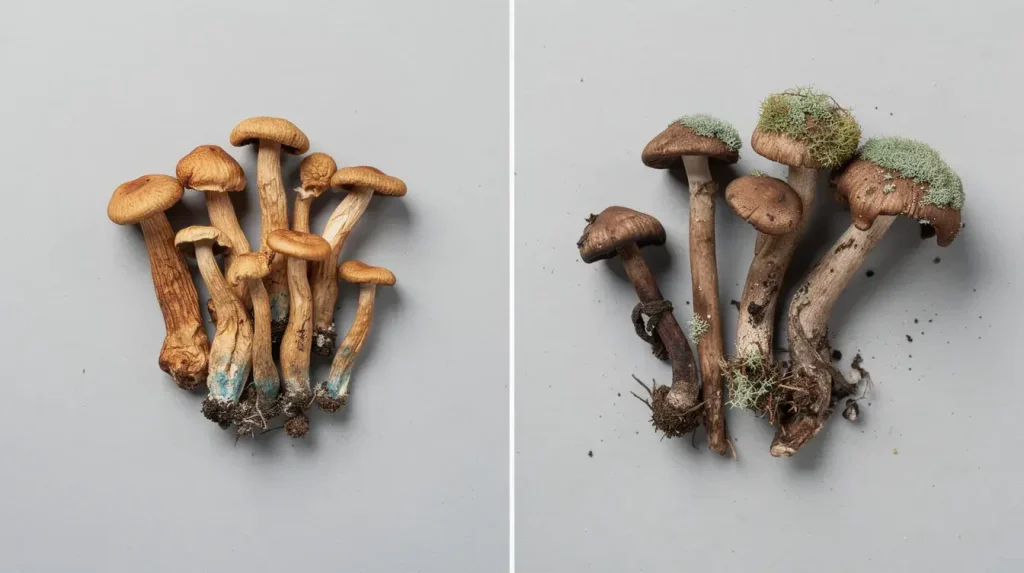
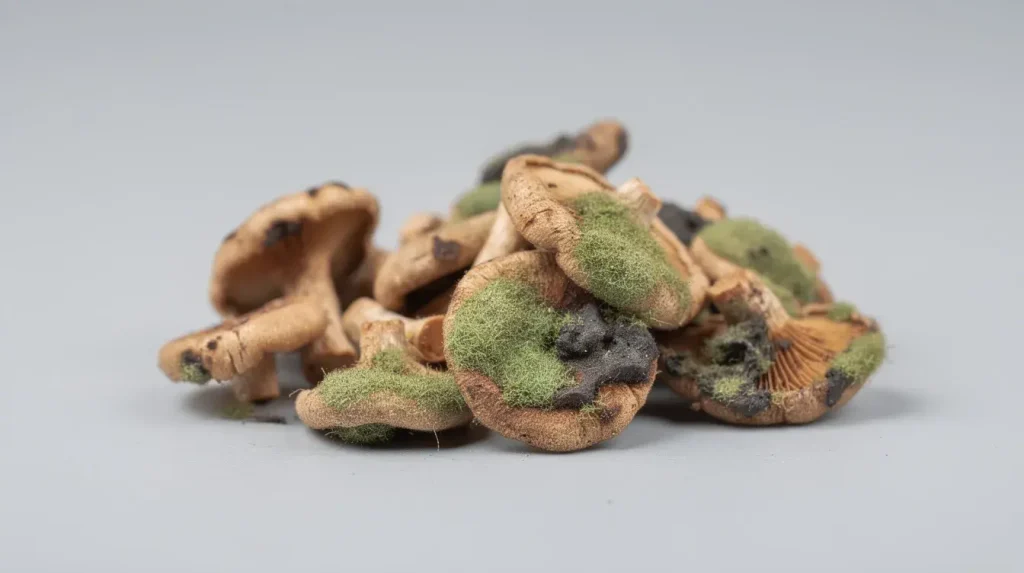
- Blue bruising is usually normal oxidation of psilocin, not contamination. Fuzzy green, black, or bright white patches, sliminess, or a sour and musty smell mean the shrooms have gone bad and should be thrown away.
- The biggest risks from “bad” dried shrooms are food poisoning and unpredictable trips, not the classic organ-failure poisonings associated with toxic wild mushroom species.
- When in doubt, discard the entire batch. Visible mold on mushrooms can penetrate beyond what is visible, and cutting off moldy sections doesn’t remove mycotoxins that have already spread through the tissue.
- At Canada Shrooms, every batch is professionally dried, sealed, and lab-tested before shipping. If you’re ever unsure about your own stash, we encourage a harm reduction mindset: replacing questionable shrooms is always cheaper than a hospital visit.
Blue Bruising vs. Mold: How to Tell the Difference
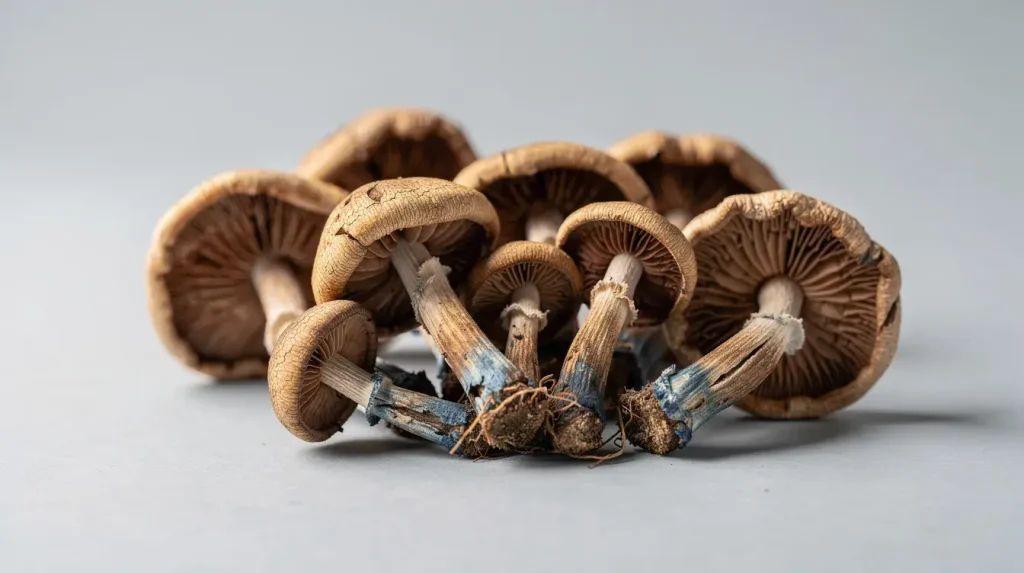
This is the single most common confusion among people inspecting their dried shrooms. Blue bruising on mushrooms is a natural reaction, not mold. It happens when psilocin oxidizes upon contact with air-common on Psilocybe cubensis and other species like Psilocybe semilanceata. Mold, on the other hand, is living growth that spreads and produces mold spores.
Blue bruising characteristics:
- Flat stains or streaks, not raised
- Blue-grey to dark navy in colour
- Usually appears where the mushroom was handled, cut, or pressed
- Part of the tissue itself; doesn’t wipe away or smear
Mold characteristics:
- Fuzzy, powdery, or cottony texture
- Often grows in circular patches that expand outward
- Colours: bright white, forest green, dark brown/black, or pastel shades
- Sits on top of the surface and may smear or release dust if touched
A simple test: gently touch a suspect spot with a fingernail. Bruising is embedded in the tissue and won’t come off. Mold may smear or release powder. Be careful not to inhale any spores during this check.
One important distinction: excessive blue bruising indicates significant psilocin degradation. If your entire batch looks deeply navy or black with a rotten smell, that’s decomposition-not just oxidation. Treat it as spoiled mushrooms and discard.
What “Gone Bad” Means for Dried Magic Mushrooms
When people say their psilocybin mushrooms have “gone bad,” they usually mean one of two things: the mushrooms are physically spoiled or contaminated and unsafe to eat, or the mushrooms are still technically safe but have become old, weak, and disappointing for a shroom trip.
Those are very different problems with very different solutions. Here’s how to distinguish them:
- Food spoilage – mold, bacteria, moisture damage, off smells. Magic mushrooms can rot and develop harmful bacteria or mold when exposed to the wrong conditions. Contaminated mushrooms can cause food poisoning symptoms including nausea, vomiting, and diarrhea.
- Chemical degradation – psilocybin and psilocin breaking down over time, leading to weaker psychedelic effects. Psilocybin degradation can result in unpredictable potency, meaning a dose that once sent you to the stars now barely produces mood shifts.
- Misidentification – mushrooms gained from unreliable sources can be misidentified as safe. Spoiled mushrooms may resemble poisonous varieties. While this guide focuses on known dried psilocybin mushrooms rather than wild-foraged unknowns, misidentifying spoiled mushrooms versus toxic species can be dangerous.
This guide is specifically about dried magic mushrooms of known mushroom species like Psilocybe cubensis-bought from a trusted source or grown at home-not supermarket culinary mushrooms or random wild picks.
Why does drying matter so much? Fresh mushrooms contain 85–95% water, which makes them a paradise for microbial growth. Fresh magic mushrooms last 24–48 hours at room temperature before spoiling, and signs of spoiled fresh mushrooms include slimy texture and unusual odor. Drying slashes moisture content below 10–15%, suppressing bacteria and mold while making visual inspection far easier.
But here’s the catch: even if dried shrooms look perfectly fine-dry, intact, no fuzz-they can still have lost significant active compounds over time. That invisible potency decline affects dose, trip quality, and safety.
Quick Visual Checklist: Are My Dried Shrooms Still Good?
Run through this checklist in under a minute before taking shrooms from any older or uncertain batch.
Good signs (likely safe):
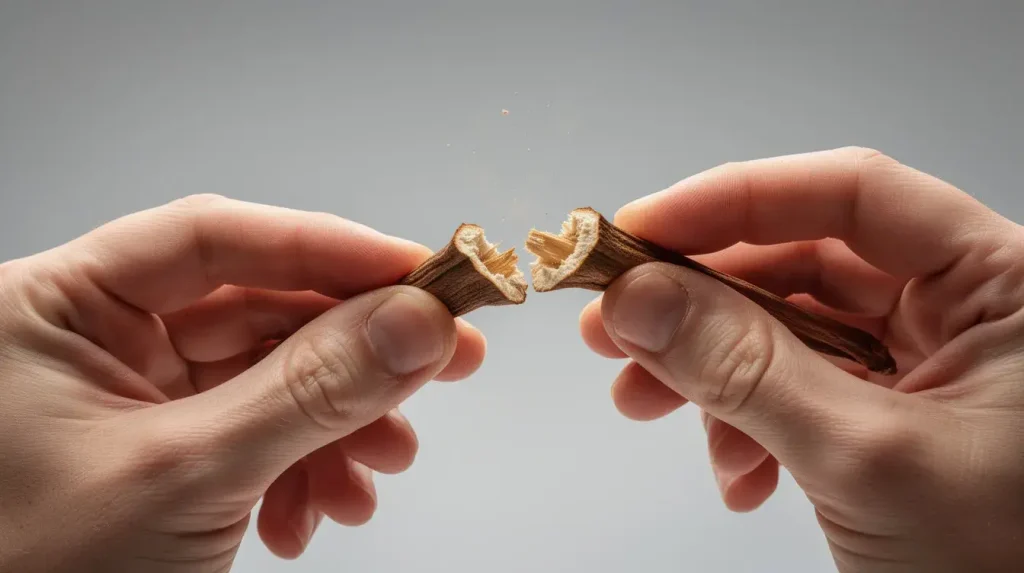
- Dry and slightly brittle; stems snap cleanly when bent
- Natural tan, brown, or caramel colour with some darker areas
- Occasional blue bruising at stem breaks or where handled
- Faint earthy, woody, mushroomy smell-not strong
- No fuzz, slime, or sticky patches
- Stored in a jar, mylar bag, or vacuum sealed bags rather than loose plastic bags
Bad signs (do not eat):
- Fuzzy growth in any colour-green, black, bright white, orange, or pink patches
- Wet, rubbery, or slimy areas
- Sour, ammonia, cheesy, or feet-like smell (spoiled mushrooms emit sharp sour or putrid odors)
- Visible cobweb-like strands spreading across surfaces
- Dark spots accompanied by fuzzy mold growth
- Clumping or pieces sticking together from moisture
The golden rule: if there’s visible mold on any piece, discard the entire batch. Mold appears as fuzzy, powdery, or distinct patches on mushrooms, and the invisible threads extend far beyond what you can see. Moldy mushrooms can lead to nausea, vomiting, and diarrhea.
If you wouldn’t feel comfortable eating them sober, don’t eat them for a trip.
How Long Do Dried Shrooms Last? (Realistic Shelf Life & Timeline)
How long do shrooms last depends almost entirely on how well they were dried and stored. Temperature, light, oxygen, and humidity are the four enemies of shelf life.
Here are concrete ranges for how long dried shrooms last:
| Storage Method | Expected Shelf Life | Potency Retention |
|---|---|---|
| Room temp, dark cupboard, basic jar | 6–12 months | Moderate decline |
| Vacuum-sealed with desiccant, cool/dark | 12–24 months | Modest loss |
| Vacuum-sealed, fully dried, frozen (–18 °C) | Several years | Strong retention |
For comparison: fresh shrooms spoil within 2–5 days at room temperature. Even refrigerated, fresh mushrooms last only about 5–10 days before decay sets in. Fresh mushrooms spoil quickly due to high moisture content-this is why drying is non-negotiable for any kind of long-term storage.
Dried mushrooms can remain potent for up to 2 years when stored properly, but potency doesn’t hold steady the whole time. A 2021 study by Gotvaldová et al. found that under ideal cold, dark, sealed conditions, roughly 90% of psilocybin was retained after 12 months. Under poor conditions (room temperature, light exposure, open air), another analysis found approximately 50% loss of psilocybin in just the first month.
The practical takeaway: expect minor loss over the first 3–6 months in good storage, a more obvious drop after 12 months, and old shrooms sometimes feeling like half strength by year two. Do shrooms expire in a hard-and-fast sense? No expiry date exists, but magic mushrooms expire functionally once potency drops below a useful threshold.
One more nuance: even within one bag, caps often retain more potency than stems over very long storage, so older stashes can feel uneven from dose to dose. Effects can vary based on dosage and individual factors, making old batches harder to predict.
Pictures in Your Head: What Good vs. Bad Dried Shrooms Look Like
Since you’re reading this article and not standing in a lab, here’s a mental picture guide to help you assess what you’re holding. Imagine each set of dried mushrooms laid out on a clean, neutral-coloured surface under consistent lighting.
Good dried mushrooms:
- Whole caps and stems, tan to caramel brown with some naturally darker areas
- Occasional blue bruising at stem joints or where pieces broke-this is psilocin oxidation, not contamination
- Dry, slightly wrinkled texture without shine or wetness
- Properly dried mushrooms should be cracker-dry and not rubbery
Questionable but possibly usable mushrooms:
- Very faded colours-pale beige or grey rather than golden brown
- Some stem hollowing and minor dryness cracks
- Shrivelled but no fuzz, slime, or unusual growths
- These are likely just old and less potent, not spoiled
Definitely bad mushrooms:
- Green or black fuzzy patches on caps or stems
- White, cottony mold that looks thicker and patchier than normal bruising
- Clumped, wet, or yellowish areas suggesting bacterial growth
- Any bright orange or pink patches-these signal contamination
Smell, Texture, and Colour: The Three Big Spoilage Clues
Your nose, fingertips, and eyes are surprisingly reliable tools for assessing dried psilocybin mushrooms. Work through these three checks in order.
Smell
- OK: Mild earthy, woody, slightly mushroomy. Not strong or sharp.
- Bad: Sour, ammonia-like, cheesy, feet-like, or sharp chemical smell. Spoiled mushrooms emit these odors because of bacterial breakdown or mold metabolites.
- Neutral/stale: A faded, almost absent smell can simply mean old but not necessarily unsafe.
Texture
- OK: Dry, slightly brittle, breaking with a satisfying snap when bent firmly.
- Questionable: Leathery or rubbery on the outside but still dry inside when broken open. Dried mushrooms absorbing moisture can become soft or sticky-this indicates your storage has failed.
- Bad: Damp to the touch, flexible and floppy, or visibly slimy or sticky. Improperly stored mushrooms can harbor harmful bacteria at this point.
Colour
- Normal range: Tan, brown, golden, sometimes olive or cream, with possible blue bruising.
- Aging signs: Overall fading to light beige or grey, some darkening at edges, dark spots from age.
- Bad: Bright green or blue fuzz, orange or pink patches, solid black rot rather than just dark bruises. Signs of spoilage include these dark spots and fuzzy mold growth on surfaces.
Potency Loss vs. Spoilage: Old, Weak Shrooms That Are Still Safe
Many people confuse “no effects” or a mild trip with the mushrooms being unsafe. Often the issue is simply that old dried shrooms have lost potency-they’re weak, not dangerous.
Common signs of potency loss without spoilage:
- Very faded colour but still dry and clean
- Little to no smell
- Stored in a jar for 2+ years with no fuzz or wet patches
- Caps feel paper-thin and hollow
Psilocin degrades faster than psilocybin because it has a free phenolic hydroxyl group that’s vulnerable to oxidation. This means older shrooms can feel gentler, shorter in duration, or more “muted” even at the same gram weight. The psychoactive compounds are simply less present. The psychoactive effects will be diminished, but the mushrooms won’t make you sick.
If you suspect an old batch has lost its punch, try a careful test dose-something like 0.5–1 g in a safe setting to gauge remaining strength before planning a full mushroom trip.
Increasing dose to compensate for age should be done slowly. Never combine large uncertain doses of old shrooms with other substances if you’re unsure about potency. Psilocybin degradation can result in unpredictable potency, so the active compounds may not be distributed evenly. High doses increase the risk of panic and anxiety during trips.
How Storage Affects Shelf Life: Jars, Plastic Bags, & Freezers
Why do some people’s shrooms remain potent after 18 months while others go bad in a few weeks? Storage is the answer. Here’s how common options compare when you store magic mushrooms:
Storage containers:
- Thin plastic bags: Trap moisture, tear easily, encourage condensation. Acceptable short-term but risky for anything beyond a couple of weeks. Never use a paper bag-it absorbs and releases moisture unpredictably.
- Glass jars (mason jars): Excellent for day-to-day storage if mushrooms are already very dry. Store mushrooms in an airtight container to limit oxidation. Use silica gel packs to control humidity in storage.
- Mylar bags with oxygen absorbers: Great for bulk, light-blocking long-term storage. Provide a longer shelf life than clear containers.
- Vacuum sealed bags: Vacuum sealing dried mushrooms minimizes oxygen exposure, but mushrooms must be completely dry first. Vacuum-sealed dried mushrooms can last several years in the freezer.
Environmental enemies:
- Heat above ~25 °C accelerates degradation. Improper storage can allow harmful bacteria to grow on mushrooms.
- Light, especially sunlight, breaks down psilocin and psilocybin.
- Humidity rehydrates dried shrooms and encourages mold. Dried mushrooms can develop mold if exposed to moisture.
- Insect infestations can occur in poorly sealed stored mushrooms.
Good storage spots in a Canadian home: dark cupboard away from appliances, cool basement shelf, back of a closet in winter, or a dedicated container in a fridge.
Avoid: bathrooms, above stoves, near windows, or in cars. Temperature swings and moisture are the fastest ways to ruin a batch.
If you want to freeze magic mushrooms, ensure they’re bone-dry first. Ice crystals form if any residual moisture is present, and freeze-thaw cycles create condensation that damages both potency and safety. Freezing dried mushrooms can extend shelf life significantly when done correctly.
Step-by-Step: How to Store Magic Mushrooms So They Don’t Go Bad
Whether you’ve just received a delivery or harvested a home-grown flush, follow these steps to preserve potency and prevent spoilage:
- Confirm full dryness. Snap-test several stems. They should break cleanly like a dry twig, not bend. If any feel flexible, finish drying in a food dehydrator at 35–45 °C before storing.
- Choose your container. Glass mason jars, mylar bags, or vacuum-seal bags all work. Add a food-grade silica gel or desiccant packet to absorb residual humidity.
- Fill without crushing. Whole dried mushrooms retain potency longer than powder because there’s less surface area exposed to oxygen. Pack gently.
- Label everything. Write the strain, date, and approximate weight on the container. If you know the potency (e.g., from lab results), note that too.
- Store in a cool, dark, stable-temperature spot. A cupboard, basement shelf, or fridge works. For very long-term storage, vacuum seal and freeze.
- Separate your daily-use stash. Keep a small jar for regular access so you’re not repeatedly opening your main storage container and exposing the bulk to air and humidity.
Check out our full Storage Guide for more information.
Ground mushrooms and microdose capsules tend to lose potency faster than whole dried mushrooms because of increased surface area and oxygen exposure. If you’re making your own capsules, prepare small batches and store the remaining whole mushrooms separately.
At Canada Shrooms, all dried mushrooms are professionally dehydrated and packaged in sealed containers, but proper storage after delivery is still your responsibility.
Harm Reduction: What If You Accidentally Took Questionable Shrooms?
This is not medical advice. If you suspect food poisoning or serious distress, contact your local health services, poison control, or call 911.
Mild and expected issues from slightly stale (but not moldy) shrooms:
- Mild nausea or stomach discomfort
- Weaker-than-expected psychedelic effects
- Shorter trip duration (just a few hours rather than a full session)
- Mild headache or general unease
Psilocybin effects typically last between three to six hours, with peak effects occurring two to three hours after ingestion. Microdoses of 0.1 to 0.3 grams last two to three hours. A moderate dose of 1 to 2.5 grams lasts four to six hours. High doses of 3.5 grams and above can last six to eight hours. If symptoms persist well beyond these windows, something else may be going on.
Red-flag symptoms (seek help immediately):
- Persistent vomiting or severe cramps
- High fever
- Confusion that doesn’t match a typical shroom trip
- Chest pain or difficulty breathing
- Symptoms lasting many hours after effects should have worn off
Spoiled mushrooms can lead to acute food poisoning and gastrointestinal distress. Mycotoxins produced by molds can lead to nausea and other symptoms that go beyond the normal experience. Eating spoiled mushrooms can cause gastrointestinal issues separate from any psychoactive effects.
Bad trips can exacerbate existing mental health conditions. Avoid mixing magic mushrooms with alcohol or other substances, especially if batch quality is unknown-this keeps symptoms easier to interpret. Practical harm reduction tips: stay hydrated, have a sober sitter, stay in a safe environment, and seek medical help early rather than waiting if something feels wrong.
Canada Shrooms Perspective: Quality, Lab Testing & When to Replace Your Stash
Canada Shrooms is a Canadian online dispensary offering lab-tested psilocybin products-dried mushrooms, microdose capsules, and edibles-shipped discreetly across Canada.
Every batch undergoes professional dehydration under controlled indoor conditions and sealed packaging before it reaches your door. This means the contamination risks discussed above are addressed before products ever ship. Lab testing covers potency (psilocybin and psilocin content reported in mg/g and % w/w), microbial contamination, heavy metals, and mycotoxins. Batches that fail standards are rejected.
This matters because predictable dosing leads to safer trips. When you know a batch contains a specific psilocybin percentage, you can plan a moderate dose or a microdose protocol with confidence. With unknown, old, or home-dried shrooms, you’re guessing-and guessing with psychedelic substances is where health risks multiply.
When should you replace your stash? If your dried mushrooms are more than 12–18 months old without optimized storage, visually suspect, or from an unlabelled source, consider starting fresh with a clearly labelled, tested batch. The therapeutic potential of psilocybin is best explored with predictable, quality material. Psilocybin and psilocin are controlled substances under Canada’s CDSA, and while the legal landscape is evolving, quality control remains a personal safety priority.
Even with premium products, we encourage every customer to store magic mushrooms correctly at home and to prioritize harm reduction at every step of the experience.
Frequently Asked Questions About Dried Magic Mushrooms Going Bad
These FAQs address specific edge-case questions not fully covered in the sections above.
Can I cut mold off dried shrooms and eat the rest?
No. Mold threads (mycelium) spread invisibly through the tissue, and mycotoxins can diffuse well beyond the visible fuzzy spots. Moldy mushrooms can cause gastrointestinal issues if consumed, even if you only eat the “clean-looking” parts. For dried magic mushrooms, the safest approach is to discard the entire batch if any pieces show mold or unexplained fuzzy growth. The cost of replacing a few grams is small compared to the risk of food poisoning or a severely unpleasant experience.
Is it safe to eat dried mushrooms that were kept in a hot car or attic?
Heat is one of the fastest ways to destroy both safety and potency. Summer car interiors can reach 40–60 °C, rapidly accelerating chemical degradation and encouraging condensation inside plastic bags. Shrooms exposed to repeated heating and cooling cycles may be both weak and more prone to mold or bacterial contamination. Inspect carefully-smell, texture, colour, fuzz-and discard any stash that smells off or shows visual spoilage. Even if they look fine, potency will likely be significantly reduced.
Can I re-dry mushrooms that feel a bit soft or rubbery?
Slightly under-dried shrooms can sometimes be salvaged by finishing the drying process in a food dehydrator at around 35–45 °C, as long as there is no visible mold. Once mold is present, re-drying does not make them safe-it only dries out the contamination. Re-dry borderline batches quickly, then store them properly in an airtight container with desiccant. When in doubt, discard.
Do microdose capsules or ground-up dried shrooms go bad faster?
Yes. Powder loses potency faster than whole dried mushrooms because there is more surface area exposed to oxygen and humidity. Home-made capsules stored cool, dark, and dry in sealed containers are typically reasonable for about 6–12 months. Canada Shrooms microdose products are professionally encapsulated and packaged, but customers should still follow storage best practices and pay attention to any noted dates.
If my shrooms are weak, will taking a lot more guarantee a strong trip?
Guessing at an “extra” dose to compensate for age is risky because degradation may be uneven between pieces and within a batch. Instead, slowly titrate up from a small test dose on a separate day in a safe setting until you understand how long shrooms from that batch actually last in terms of effects and how strong they still are. A bad trip from an unexpectedly potent cap in a degraded batch is a real possibility. Never combine large uncertain doses of old shrooms with other substances like alcohol, benzodiazepines, or stimulants due to unpredictable interactions. Psilocybin mushrooms are not considered physically addictive, but altered thinking from an unexpected high dose can be psychologically distressing. Residual effects can linger, and in rare cases some users report persistent visual disturbances or hallucinogen persisting perception disorder-a perception disorder where visual disturbances continue long after the psychedelic effects have ended.